EMT Practice Test

1. Question Content...


Question List
Question1: A patient with multiple atypical lesions on the face and trunk is in the office to perform a biopsy. A punch tool was used to obtain a full-thickness tissue sample for two lesions on the trunk.
Partial-thickness tissue sample was taken from one lesion on the forehead using a curette.
What CPTcoding is reported?

Question2: A patient suffering from idiopathic dystonia is seen today and receives the following Botulinum injections:
three muscle injections in both upper extremities and seven injections in six paraspinal muscles.
How are these injections reported according to the CPT guidelines?

Question3:
Refer to the supplemental information when answering this question:
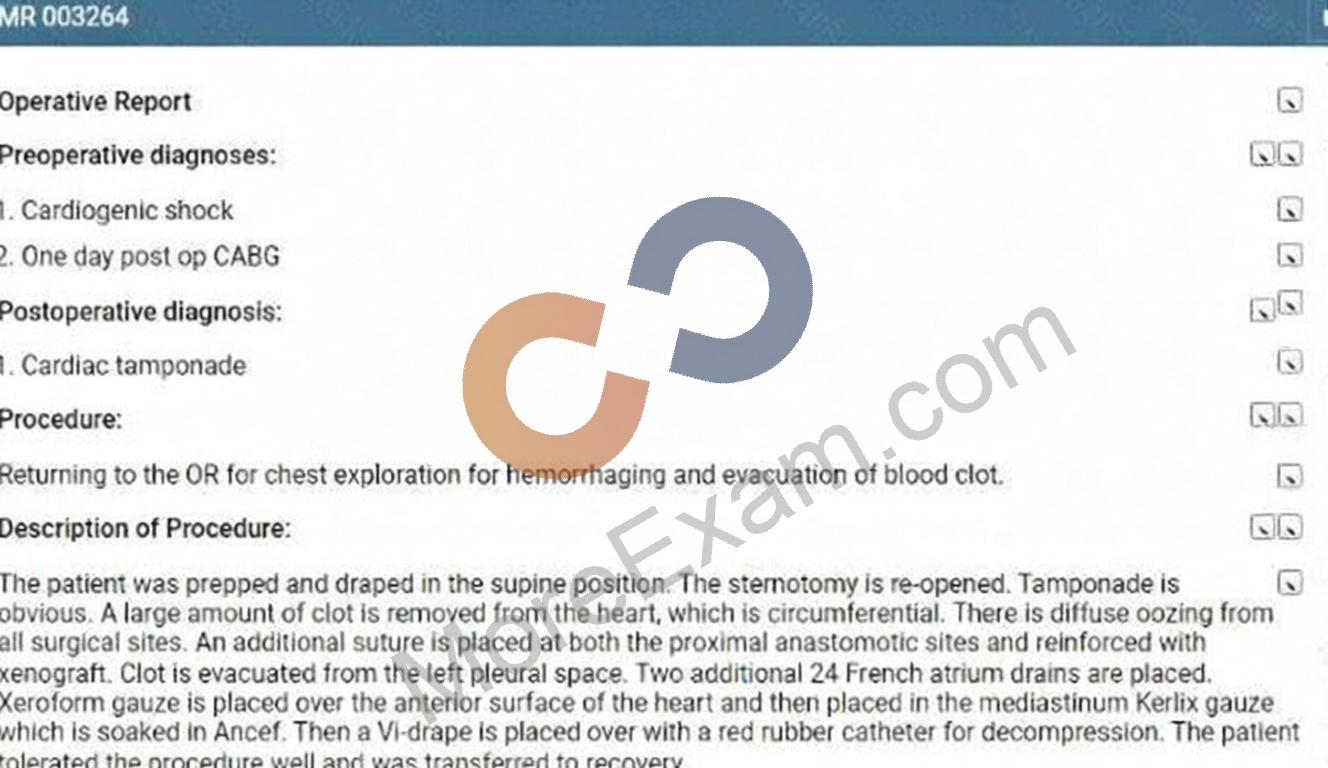
View MR 003264
What is the procedural coding?

Question4: A comatose patient is seen in the ER. The patient has a history of depression. Drug testing confirm she overdosed on tricyclic antidepressant drugs doxepin, amoxapine, and clomipramine.
What CPT code is reported?

Question5: Regarding the CPTSurgery Guidelines for a surgical code designated as a "Separate Procedure", which statement is FALSE?

Question6: A surgeon performed Mohs micrographic surgery on a lesion on the right arm. This required one stage with six tissue blocks.
What CPT@ codes are reported for the Mohs surgery?

Question7: 56-year-old female is postmenopausal with abnormal vaginal bleeding. Ob-gyn provider performs a hysteroscopy to examine the uterine cavity.
What CPTcode is reported?

Question8: When a patient has ESRD, which system is affected?

Question9: A 58-year-old male suffered an acute STEMI of the inferolateral wall while running a marathon on June 15 and had received treatment. Three weeks later, the patient presents to the ED complaining of SOB and left arm pain. An EKG is performed as well as blood tests. Patient is admitted for further evaluation.
What diagnosis code is reported for this encounter?

Question10: Mr. Roland has difficulty breathing and congestion with a productive cough. The physician takes frontal and lateral view chest X-rays in the office (the equipment is owned by the physician group). The physician reads the X-rays and determines a diagnosis of walking pneumonia. The physician's interpretation is placed in the patient's chart.
How does the physician bill for the chest X-ray?

Question11: A patient presents to the ER from a nursing home after the patient was found to have foul smelling, large sacral pressure ulcer during daily nursing rounds. The ER provider swabbed the wound for culture (which measured at 7cm in largest diameter); then cleaned the site before painting with povidone around the entire sacrum to reduce cutaneous bacterial load. The provider made an elliptical excision with 3mm margins around the outer edge of the ulcer and removed the lesion in its entirety.
Further examination revealed deep tissue damage, prompting muscle and
segmental bone removal. The wound was then closed using a layered skin flap closure.
What CPTcoding and ICD-10-CM coding is reported?

Question12: According to the Repair (Closure) CPT guidelines, what type of repair is reported when a single layer closure includes copious irrigation and extensive cleaning to remove particulate matter?

Question13: A patient has swelling in both arms and lymphangitis is suspected. She is in the outpatient radiology department for a lymphangiography of both arms.
What CPTcoding is correct?

Question14: The gastroenterologist performs a simple excision of three external hemorrhoids and one internal hemorrhoid, each lying along the left lateral column. The operative report indicates that the internal hemorrhoid is not prolapsed and is outside of the anal canal.
What CPT and ICD-10CM codes are reported?

Question15: Ten-year-old boy has a painful felon abscess of the deep tissues of the palmar surface of his right thumb. The provider makes an incision on one side of the nail and then across the fingertip parallel to the end of the nail.
He identifies the area of abscess and drains it. A drainage tube is inserted.
What CPTand ICD-10-CM is reported?

Question16: A patient presents to the pulmonologist's office for the first time with coughing and shortness of breath. The patient has a history of asthma. The physician performs a medically appropriate history and exam. The following labs are ordered: CBC, arterial blood gas, and sputum culture. The pulmonologist assesses the patient with a new diagnosis of COPD. The patient is given a prescription for the inhaler Breo Ellipta.
What E/M code is reported?

Question17: An elderly patient comes into the emergency department (ED) with shortness of breath. An ECG is performed The final diagnosis at discharge is impending myocardial infarction.
According to ICD-10-CM guidelines, how is this reported?

Question18: A patient arrives for a PEG placement. The patient requires tube feeds for nutrition but frequently pulls out the dobhoffs tube. An EGD was performed. Several attempts were made to place the PEG tube without success so the procedure was aborted. During the withdraw of the scope, a small hiatal hernia was noted in the stomach. The scope was removed the the patient transferred to recovery.
What CPT and ICD-10-CM coding is reported?

Question19: A 44-year-old female patient came in for a planned laparoscopic total abdominal hysterectomy for endometriosis of the uterus. The surgeon attached the trocars, a scope is inserted examining the uterus, abdominal wall, bilateral ovaries, and fallopian tubes. The surgeon decided to convert the laparoscopic procedure to an open total hysterectomy because of the extensive amount of adhesions that need to be removed. A total hysterectomy was performed and due to removal of the extensive adhesions the surgery took longer than normal of 2 hours.
What CPTand diagnosis codes are reported?

Question20: A 32-year-old is in the outpatient clinic for an esophagoscopy due to increased difficulty swallowing with his eosinophilic esophagitis. The flexible scope is inserted in the mouth and into the esophagus. Examination of the esophagus noted narrowing in the distal esophagus. Following an injection of Kenalog, a transendoscopic balloon dilation was performed in the area of stenosis. Inflation was repeated eventually reaching 18 mm in diameter. What CPTcoding is reported for this procedure?

Question21: A 49-year-old patient arrives with hearing loss in his left ear. Impedance testing via tympanometry is performed.
What CPT code is reported?

Question22: In rhinoplasty:

Question23:

Refer to the supplemental information when answering this question:
View MR 874276
What E/M code is reported?

Question24: A patient has chronic cholesteatoma in the right middle ear. The otolaryngologist performed a tympanoplasty with a radical mastoidectomy, removing the middle ear cholesteatoma. Grafting technique was used to repair the eardrum without ossicular chain reconstruction.
What CPT code is reported for this surgery?

Question25: View MR 002395
MR 002395
Operative Report
Pre-operative Diagnosis: Acute rotator cuff tear
Post-operative Diagnosis: Acute rotator cuff tear, synovitis
Procedures:
1) Rotator cuff repair
2) Biceps Tenodesis
3) Claviculectomy
4) Coracoacromial ligament release
Indication: Rotator cuff injury of a 32-year-old male, sustained while playing soccer.
Findings: Complete tear of the right rotator cuff, synovitis, impingement.
Procedure: The patient was prepared for surgery and placed in left lateral decubitus position. Standard posterior arthroscopy portals were made followed by an anterior-superior portal. Diagnostic arthroscopy was performed. Significant synovitis was carefully debrided. There was a full-thickness upper 3rd subscapularis tear, which was repaired. The lesser tuberosity was debrided back to bleeding healthy bone and a Mitek 4.5 mm helix anchor was placed in the lesser tuberosity. Sutures were passed through the subcapulans in a combination of horizontal mattress and simple interrupted fashion and then tied. There was a partial-thickness tearing of the long head of the biceps. The biceps were released and then anchored in the intertubercular groove with a screw. There was a large anterior acromial spur with subacromial impingement. A CA ligament was released and acromioplasty was performed. Attention was then directed to the supraspinatus tendon tear. The tear was V-shaped and measured approximately 2.5 cm from anterior to posterior. Two Smith & Nephew PEEK anchors were used for the medial row utilizing Healicoil anchors.
Side-to-side stitches were placed. One set of suture tape from each of the medial anchors was then placed through a laterally placed Mitek helix PEEK knotless anchor which was fully inserted after tensioning the tapes. A solid repair was obtained. Next there were severe degenerative changes at the AC joint of approximately 8 to 10 mm. The distal clavicle was resected taking care to preserve the superior AC joint capsule. The shoulder was thoroughly lavaged. The instruments were removed and the incisions were closed in routine fashion. Sterile dressing was applied. The patient was transferred to recovery in stable condition.
What CPT coding is reported for this case?

Question26: A patient that delivered her second child vaginally has a history of having a previous cesarean delivery for the first child.
What CPTcode is reported for the delivery of the second child with antepartum care and postpartum care with the same provider?

Question27: A cardiologist uses the hospital's equipment for a cardiac stress test as he doesn't own equipment for the test.
He supervises the test and provides the interpretation and report of the test.
What CPT codes are reported?

Question28: According to the ICD-10-CM Guidelines, what code is reported as an additional code when the blood pressure of a patient with hypertension remains above goal in spite of the use of antihypertensive medications?

Question29: A surgeon removes the right and left fallopian tubes and the left ovary via an abdominal incision. How is this reported?

Question30: The documentation states:
He was then sterilely prepped and draped along the flank and abdomen in the usual sterile fashion. I first made a skin incision off the tip of the twelfth rib, extending medially along the banger's lines of the skin. This was approximately 3.5 cm in length. Once this incision was carried sharply, electrocautery was used to gain access through the external oblique, internal oblique, and transverse abdominis musculature and fascia.
What surgical approach was used for this procedure?

Question31: The CPTcode book provides full descriptions of medical procedures, although some descriptions require the use of a semicolon (;) to distinguish among closely related procedures.
What is the full description of CPTcode 69644?

Question32: A 42-year-old male is diagnosed with a left renal mass. Patient is placed under general anesthesia and in prone position. A periumbilical incision is made and a trocar inserted. A laparoscope is inserted and advanced to the operative site. The left kidney is removed, along with part of the left ureter. What CPT code is reported for this procedure?

Question33: A 60-year-old male suffering from degenerative disc disease at the L3-L4 and L5-S1 levels was placed under general anesthesia. Using an anterior approach, the L3-L4 disc space was exposed. Using blunt dissection, the disc space was cleaned. The disc space was then sized and trialed. Excellent placement and insertion of the artificial disc at L3-L4 was noted. The area was inspected and there was no compression of any nerve roots.
Same procedure was performed on L5-S1 level. Peritoneum was then allowed to return to normal anatomic position and entire area was copiously irrigated. The wound was closed in a layered fashion. The patient tolerated the discectomy and arthroplasty well and was returned to recovery in good condition. What CPT coding is reported for this procedure?

Question34: A three-year-old patient is in the operative suite for stage 2 of treatment for double right outlet syndrome. The patient previously had the pulmonary artery banded and is returning for removal of the pulmonary band and transposition repair of the great vessels via aortic pulmonary reconstruction.
The surgeon performs a time-out and pre-incision review of respiration and BP then the previous sternal incision site is inspected and lightly painted with povidone. Next, reopens the sternal cavity and inserts central cannulae in the IVC, SVC and ascending aorta for extra corporeal membrane oxygenation (ECMO) bypass, chemical cardioplegia is initiated, stopping the heart and ECMO is initiated. A physician assistant monitors vitals and oxygenation until heart function resumes. The surgeon carefully incised and removes the Dacron band encircling the pulmonary artery, with nominal need for dilation. A section of coronary ostia is removed and sutured to the root of the pulmonary trunk. The pulmonary trunk and aortic root are then transected and transposed to allow for ideal cardiac circulation. Once structural integrity is visually confirmed, the physician assistant is permitted to administer the cardioplegia reversal solution and the surgeon removes the central cannulae after heart function safely resumes. The sternotomy is closed and the patient is transported to the NICU.
What CPTcodes are reported for the surgery today?

Question35: A 20-year-old female is being seen for the first time by a primary care physician to have a yearly physical.
During the examination for the physical, the provider discovers non-inflammed lesions on her legs and arms.
The physician performs a complete physical and additional separate documentation for the treatment of the lesions on the bilateral upper and lower extremities. The provider has the patient buy an over-the-counter ointment and will continue to watch them.
What CPT coding is reported for this visit?

Question36:
Refer to the supplemental information when answering this question:
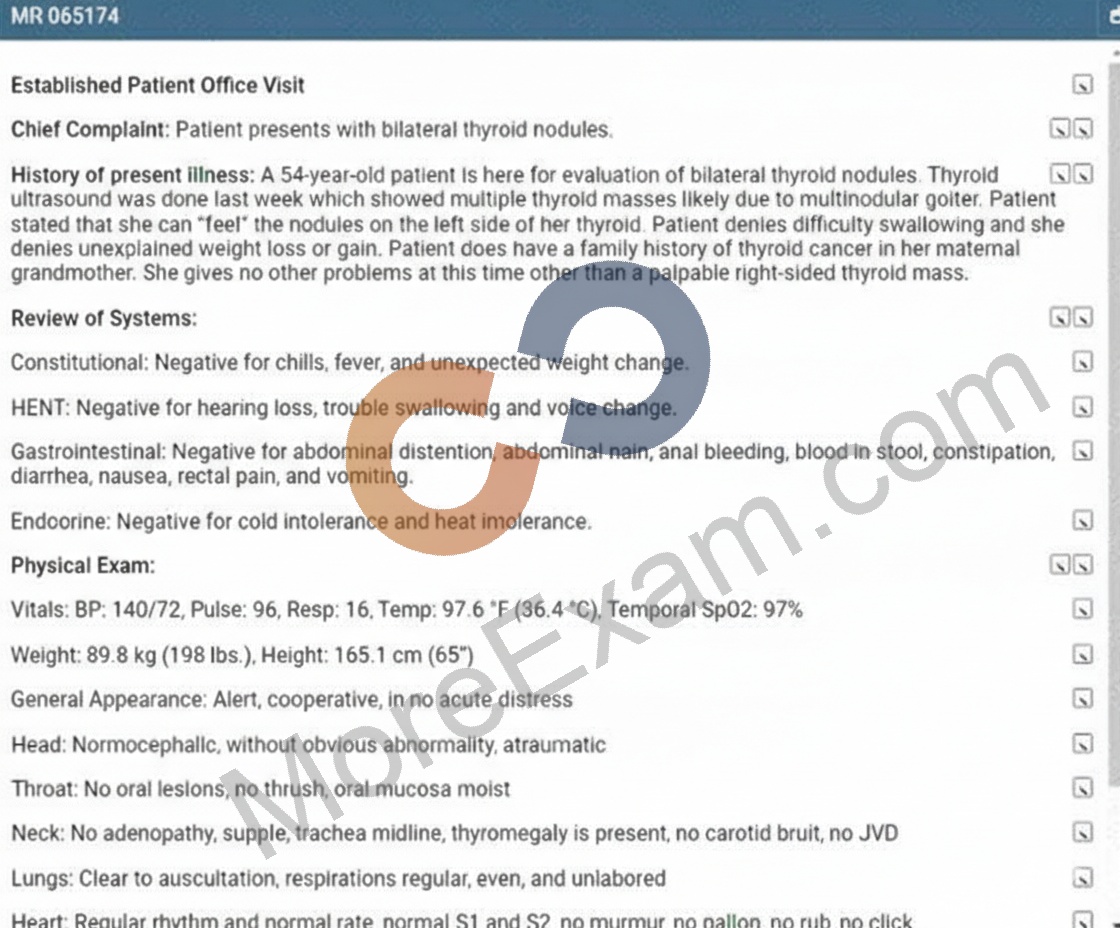
View MR 065174
What E/M code is reported for this encounter?

Question37: A patient who has colon adenocarcinoma undergoes an open partial colectomy. The surgeon removes the proximal colon and terminal ileum and reconnects the cut ends of the distal ileum and remaining colon.
What procedure and diagnosis codes are reported?

Question38: A patient is diagnosed with a pressure ulcer on her right heel that is currently being treated.
What ICD-10-CM code is reported?

Question39: The pulmonologist performs a bronchoscopy with fluoroscopic guidance. The scope is introduced into the right nostril and advanced to the vocal cords and into the trachea. The scope is advanced to the right upper lobe and a lung nodule is noted. An endobronchial biopsy is performed.
What CPT code is reported for the procedure?

Question40: Which statement is TRUE for an Excludes2 note that is under a code in the Tabular List for ICD-10-CM?

Question41: Adenoids, tonsils, appendix, and spleen belong to which organ system?
Question42:

Refer to the supplemental information when answering this question:
View MR 138093
What E/M coding is reported?

Question43: A physician excises a 3.5 cm malignant lesion including margins from the back. Then a destruction of a 2.0 cm benign lesion on the right cheek of the face with cryosurgery.
What CPT@ and ICD-10-CM is reported?

Question44: A cardiologist performs remote monitoring for a 30-day period via a previously implanted hemodynamic pulmonary artery pressure monitor for a patient with congestive heart failure with resulting pulmonary edema.
The first month of monitoring includes weekly downloads, interpretations, trend analysis, and subsequent reports.
What CPTcode is reported?

Question45: A 1-year-old is with his mom to have his scheduled vaccinations. The physician provides counseling for routine immunizations and carries out measles, mumps, rubella and varicella (MMRV) subcutaneously and dose 3 of Hepatitis B intramuscularly without difficulty.
What CPTcodes are reported?

Question46: A patient who was training for a marathon collapsed due to heat exhaustion on a very hot day. The patient is driven by his wife to a non-facility urgent care center for him to be treated. On examination, the physician diagnoses heat exhaustion and dehydration. The physician began IV therapy of normal saline that consists of pre-packaged fluid and electrolytes. The hydration lasts for 1 and 30 minutes.
What CPTcoding is reported?

Question47: The evisceration of ocular contents was performed using a surgical microscope for enhanced visualization.
The procedure was performed on the left eye and an implant was not placed in the ocular cavity.
What CPTcoding is reported?

Question48: A 5-year-old is brought to the QuickCare in the ED to repair two lacerations: a 3 cm laceration on her right arm and 2 cm laceration on her nose. Her arm is repaired with a simple one-layer closure with sutures. Her nose is repaired with a simple repair using tissue adhesive, 2-cyanoacrylate.
How are the repairs reported?

Question49: A 3-day-old died in her sleep. The pediatrician determined this was the result of crib death syndrome. The parents give permission to refer the newborn for a necropsy. The pathologist receives the newborn with her brain and performs a gross and microscopic examination. The physician issues the findings and reports they are consistent with a normal female newborn.
What CPT code is reported?

Question50: A witness of a traffic accident called 911. An ambulance with emergency basic life support arrived at the scene of the accident. The injured party was stabilized and taken to the hospital. What HCPCS Level II coding is reported for the ambulance's service?

Question51: View MR 003396
MR 003396
Operative Report
Preoperative Diagnosis: Acute MI, severe left main arteriosclerotic coronary artery disease Postoperative Diagnosis: Acute MI, severe left main arteriosclerotic coronary artery disease Procedure Performed: Placement of an intra-aortic balloon pump (IABP) right common femoral artery Description of Procedure: Patient's right groin was prepped and draped in the usual sterile fashion. Right common femoral artery is found, and an incision is made over the artery exposing it. The artery is opened transversely, and the tip of the balloon catheter was placed in the right common femoral artery. The balloon pump had good waveform. The balloon pump catheter is secured to his skin after local anesthesia of 2 cc of
1% Xylocaine is used to numb the area. The balloon pump is secured with a 0-silk suture. The patient has sterile dressing placed. The patient tolerated the procedure. There were no complications.
What CPT coding is reported for this case?

Question52: Which one of the following is a commercial or private payer?
Question53: Patient has undergone open surgery for a left total knee arthroplasty. While in the recovery room, he continued to have severe postoperative pain. The surgeon ordered a femoral block for postoperative pain. The anesthesiologist evaluated the patient and performed a left femoral block, which provided significant post-operative pain relief.
What CPT coding is reported?

Question54: The Medicare program has multiple parts covering different services. Which part provides coverage for outpatient physician charges?

Question55: Patient has esotropia of the right eye and presents to operating suite for strabismus surgery. The physician resects the medial rectus horizontal and lateral rectus muscles of the eye and secures them with adjustable sutures. Extensive scar tissue is noted, due to a previous surgery involving an extraocular muscle. Extraocular muscle is isolated, and the muscle is freed from surrounding scar tissues.
What CPTcodes are reported for this surgery?

Question56:
Refer to the supplemental information when answering this question:
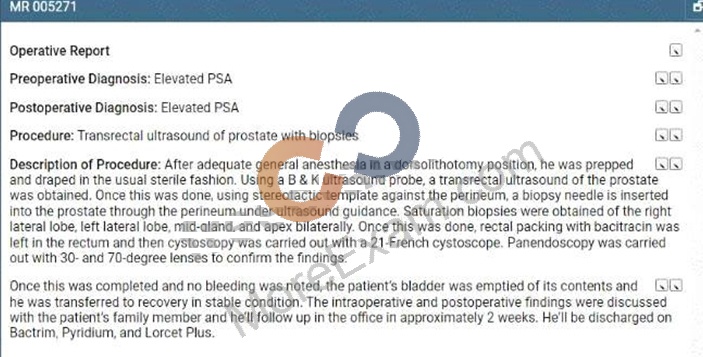
View MR 005271
What CPTcoding is reported?

Question57: A patient is having X-ray imaging of his abdomen following a traumatic episode. A decubitus, supine, and erect views are performed on the abdomen.
What CPTis reported?

Question58: A patient complains of tarry, black stool, and epigastric tightness. An esophagogastroduodenoscopy is recommended to evaluate the source of the bleeding. The endoscope is inserted orally. The esophagus appears normal on scope insertion. No evidence of bleeding in the stomach. The scope is then passed into the duodenum, where a polyp is found and removed with hot biopsy forceps. No evidence of bleeding post procedure.
What CPTcode is reported?

Question59: A 6-French sheath and catheter is placed into the coronary artery and is advanced to the left side of the heart into the ventricle. Ventriculography is performed using power injection of contrast agent. Pressures in the left heart are obtained. The coronary arteries are also selected and imaged.
What CPTcode is reported?

Question60: View MR 005398
MR 005398
Operative Report
Preoperative Diagnosis: Nonfunctioning right kidney with ureteral stricture.
Postoperative Diagnosis: Nonfunctioning right kidney with ureteral stricture.
Procedure: Right nephrectomy with partial ureterectomy.
Findings and Procedure: Under satisfactory general anesthesia, the patient was placed in the right flank position. Right flank and abdomen were prepared and draped out of the sterile field. Skin incision was made between the 11th and 12th ribs laterally. The incision was carried down through the underlying subcutaneous tissues, muscles, and fascia. The right retroperitoneal space was entered. Using blunt and sharp dissection, the right kidney was freed circumferentially. The right artery, vein, and ureter were identified. The ureter was dissected downward where it is completely obstructed in its distal extent. The ureter was clipped and divided distally. The right renal artery was then isolated and divided between 0 silk suture ligatures. The right renal vein was also ligated with suture ligatures and 0 silk ties. The right kidney and ureter were then submitted for pathologic evaluation. The operative field was inspected, and there was no residual bleeding noted, and then it was carefully irrigated with sterile water. Wound closure was then undertaken using 0 Vicryl for the fascial layers, 0 Vicryl for the muscular layers, 2-0 chromic for subcutaneous tissue, and clips for the skin. A Penrose drain was brought out through the dependent aspect of the incision. The patient lost minimal blood and tolerated the procedure well.
What CPT coding is reported for this case?

Question61: A 45-year-old female presents to the ED with chest pain. The provider has an Albumin Cobalt Binding Test to determine if the chest pain is ischemic in nature.
That lab test is reported?

Question62: Patient with erectile dysfunction is presenting for same day surgery in removal and replacement of an inflatable penile prosthesis.
What CPTcode is reported for this service?

Question63: Patient is admitted in observation care on 12/2/20XX in the morning for acute asthma exacerbation. The ED physician requires the patient to stay overnight. Next day, 12/3/20XX the patient is discharged from observation care in the afternoon. Patient's total stay in observation was 16 hours.
What E/M categories and code ranges are appropriate to report?

Question64: A 45-year-old has a dislocated patella in the left knee after a car accident. She taken to the hospital by EMS for surgical treatment. In the surgery suite, the patient is placed under general anesthesia. After being prepped and draped, the surgeon makes an incision above the knee joint in front of the patella. Dissection is carried through soft tissue and reaching the patella in attempt to reduce the dislocation. When the patella is exposed, it is severely damaged due to cartilage breakdown. The tendon is dissected and using a saw the entire patella is freed and removed. The tendon sheath is closed with sutures.
What procedure code is reported for this surgery?

Question65: A 19-year-old is seen by his, primary care physician for an annual exam. His last exam with the primary care physician was four years ago. He has no complaints.
What CPT code is reported?

Question66: View MR 099405
MR 099405
CC: Shortness of breath
HPI: 16-year-old female comes into the ED for shortness of breath for the last two days. She is an asthmatic.
Current medications being used to treat symptoms is Advair, which is not working and breathing is getting worse. Does not feel that Advair has been helping. Patient tried Albuterol for persistent coughing, is not helping. Coughing 10-15 minutes at a time. Patient has used the Albuterol 3x in the last 16 hrs. ED physician admits her to observation status.
ROS: No fever, no headache. No purulent discharge from the eyes. No earache. No nasal discharge or sore throat. No swollen glands in the neck. No palpitations. Dyspnea and cough. Some chest pain. No nausea or vomiting. No abdominal pain, diarrhea, or constipation.
PMH: Asthma
SH: Lives with both parents.
FH: Family hx of asthma, paternal side
ALLERGIES: PCN-200 CAPS. Allergies have been reviewed with child's family and no changes reported.
PE: General appearance: normal, alert. Talks in sentences. Pink lips and cheeks. Oriented. Well developed.
Well nourished. Well hydrated.
Eyes: normal. External eye: no hyperemia of the conjunctiva. No discharge from the conjunctiva Ears: general/bilateral. TM: normal. Nose: rhinorrhea. Pharynx/Oropharynx: normal. Neck: normal.
Lymph nodes: normal.
Lungs: before Albuterol neb, mode air entry b/l. No rales, rhonchi or wheezes. After Albuterol neb.
improvement of air entry b/l. Respiratory movements were normal. No intercostals inspiratory retraction was observed.
Cardiovascular system: normal. Heart rate and rhythm normal. Heart sounds normal. No murmurs were heard.
GI: abdomen normal with no tenderness or masses. Normal bowel sounds. No hepatosplenomegaly Skin: normal warm and dry. Pink well perfused Musculoskeletal system patient indicates lower to mid back pain when she lies down on her back and when she rolls over. No CVA tenderness.
Assessment: Asthma, acute exacerbation
Plan: Will keep her in observation overnight. Will administer oral steroids and breathing treatment. CXR ordered and to be taken in the morning.
What E/M code is reported?

Question67: A patient is taken to the radiology department for a radiological cardiac catheterization. An acute MI of the left anterior descending coronary artery is found. The cardiologist performs a suction thrombectomy, followed by atherectomy and a stent to the artery. A CRNA provides MAC for this patient, who is status P5.
What code/modifier combination would you report for the services of the CRNA?

Question68: Which statement regarding lesion excision is TRUE?

Question69: This 27-year-old male has morbid obesity with a BMI of 45 due to a high calorie diet. He has decided to have an open Roux-en-Y gastric bypass. The patient is brought to the operating room and placed in supine position.
A midline abdominal incision is made. The stomach is mobilized, and the proximal stomach is divided and stapled creating a small proximal pouch in continuity with the esophagus. A short limb of the proximal bowel of 155 cm is divided. It is brought up and anastomosed to the gastric pouch. The other end of the divided bowel is connected back into the distal small bowel to the short limb's gastric anastomosis to restore intestinal continuity. The abdominal incision is closed.
What are the procedure and diagnosis codes for this encounter?

Question70: A 25-year-old woman underwent percutaneous breast biopsy on the right breast with placement of a Gelmark clip. The procedure was performed using stereotactic imaging.
What CPTcodes will be reported?

Question71: Which statement is FALSE in reporting a personal history ICD-10-CM code?

Question72: A 78-year-old patient experiencing intermittent asthma with exacerbation is in her pulmonologist's office for a pulmonary function test. The pulmonologist tests for spirometry, vital capacity, breathing capacity, and flow volume capturing the measurements before and after administering a bronchodilator.
What CPTand ICD-10-CM codes are reported?

Question73: Patient is diagnosed with dacryocystitis, which is the inflammation of?
Question74: View MR 099407
MR 099407
Emergency Department Visit
Chief Complaint: VOMITING.
This started just prior to arrival and is still present. He has had nausea and vomiting. No diarrhea, black stools, bloody stools or abdominal pain. Pt is diabetic and has been having elevated blood sugars (320 mg/dL).
REVIEW OF SYSTEMS: Unobtainable due to patient's altered mental status.
PAST HISTORY: Poorly controlled diabetes mellitus, with history of poor compliance.
Medications: See Nurses Notes.
Allergies: PCN.
SOCIAL HISTORY: Nonsmoker. No alcohol use or drug use.
ADDITIONAL NOTES: The nursing notes have been reviewed.
PHYSICAL EXAM
Appearance: Lethargic. Patient in mild distress.
Vital Signs: Have been reviewed-tachycardic.
Eyes: Pupils equal, round and reactive to light.
ENT: Dry mucous membranes present.
Neck: Normal inspection. Neck supple.
CVS: Tachycardia. Heart sounds normal. Pulses normal.
ED. Course: Insulin IV drip per protocol, at 10 units/hr.
Zofran 8 mg 01:33 Jul 13 2008 IVP.
Phenergan 25 mg IVP. 07:52. Discussed case with physician. Dr. X. Reviewed test results. Agreed upon treatment plan. Physician will see patient in hospital.
Total critical care time: 45 min.
Disposition: Admitted to Intensive Care Unit. Condition: stable.
Admit decision based on need for monitoring and IV hydration and medications.
CLINICAL IMPRESSION: Vomiting, diabetic ketoacidosis, probable diabetes insipidus.
What E/M code is reported for this encounter?

Question75: What is the muscular ring around a lumen that contracts to control flow through that lumen called?

Question76: A patient with malignant lymphoma is administered the antineoplastic drug Rituximab 800 mg and then 100 mg of Benadryl.
Which HCPCS Level II codes are reported for both drugs administered intravenously?

Question77: A 44-year-old female patient with chest pains had a CT of her chest that identified a mass in her left lower lung. The patient currently has ovarian cancer with metastases to the liver. The radiologist suspects the cancer has spread to her lungs. The physician performed an outpatient bronchoscopic biopsy and the pathology report documents the mass as a tumor of uncertain behavior.
What ICD-10-CM codes are reported for this patient?

Question78:
Refer to the supplemental information when answering this question:
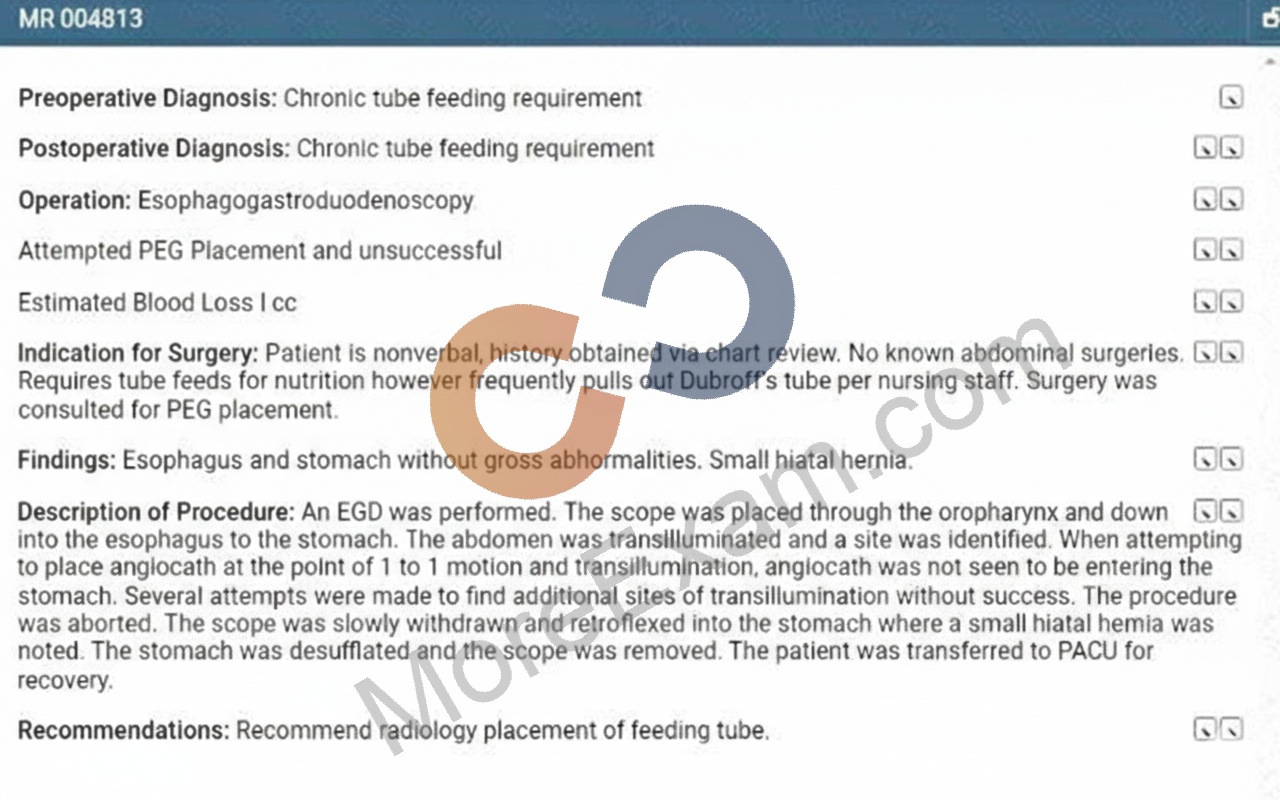
View MR 004813
What CPTand ICD-10-CM codes are reported?

Question79: Patient is diagnosed with dacryocystitis, which is the inflammation of?

Question80: A 55-year-old patient was recently diagnosed with an enlarged goiter. It has been two years since her last visit to the endocrinologist. A new doctor in the exact same specialty group will be examining her. The physician performs a medically appropriate history and exam. The provider reviewed the TSH results and ultrasound.
The provider orders a fine needle aspiration biopsy which is a minor procedure.
What E/M code is reported?

Question81: A complete cardiac MRI for morphology and function without contrast, followed by contrast with four additional sequences and stress imaging, is performed on a patient with systolic left ventricular congestive heart failure and premature ventricular contractions.
What CPTand ICD-10-CM codes are reported?

Question82: A patient's left eye is damaged beyond repair due to a work injury. The provider fabricates a prosthesis from silicon materials and makes modifications to restore the patient's cosmetic appearance.
What CPTcode is reported?

Question83: An air bag deployed when a driver lost control of the car and crashed into a guardrail on the side of the highway. The driver suffers partial impact resulting in a skull fracture of the anterior cranial base. The fracture is diagnosed using the MRI scanner and cerebrospinal fluid is noted dripping via the sphenoid sinus into the right nasal passage. The patient requires a surgical nasal sinus endoscopy to assess and repair the injury.
What is the correct procedure and diagnosis coding combination to report this service?

Question84: Where is a Warthin's tumor found?
Question85: Patient had polyps removed on a previous colonoscopy. The patient returns three months later for a follow-up examination for another colonoscopy. No new polyps are seen.
What diagnosis coding is reported for the second colonoscopy?

Question86: Mr. Woolridge has had a suspicious lesion on his left shoulder for approximately eight weeks that is not healing. On the dermatologist's exam of left shoulder blade, there is excoriation and scabbing and the lesion not healing. Patient agrees and wishes to proceed with a punch biopsy of the lesion. A punch biopsy is taken of the lesion and sent to pathology. A simple repair is performed at the biopsy site.
What CPT and ICD-10-CM codes are reported?

Question87: A patient suffers a ruptured infrarenal abdominal aortic aneurysm requiring emergent endovascular repair. An aorto-aortic tube endograft is positioned in the aorta and a balloon dilation is performed at the proximal and distal seal zones of the endograft. The balloon angioplasty is performed for endoleak treatment.
What CPT code does the vascular surgeon use to report the procedure?

Question88: A 65-year-old gentleman presents for refill of medications and follow-up for his chronic conditions. The patient indicates good medicine compliance. No new symptoms or complaints.
Appropriate history and exam are obtained. Labs that were ordered from previous visit were reviewed and discussed with patient. The following are the diagnoses and treatment:
Hypokalemia - stable. Refill Potassium 20 MEQ
Hypertension - blood pressure remaining stable. Patient states home readings have been in line with goals.
Refill prescription Lisinopril.
Esophageal Reflux - Patient denies any new symptoms. Stable condition. Continue taking over the counter Prevacid oral capsules, 1 every day.
Patient is instructed to follow up in 3 months. Labs will be obtained prior to visit.
What CPT code is reported?

Question89: A 26-year-old male presents with a deep laceration from a kitchen knife to his right hand. The surgeon washes the open wound with sterile saline. Clamps are applied. The provider cleans the vessel and prepares the edges of thee wound. She then repairs the bleeding vessel with sutures. The clamps are removed and the provider uses a Doppler probe to check the blood flow pattern through the repaired vessel.
What CPTcode is reported?

Question90:
Refer to the supplemental information when answering this question:
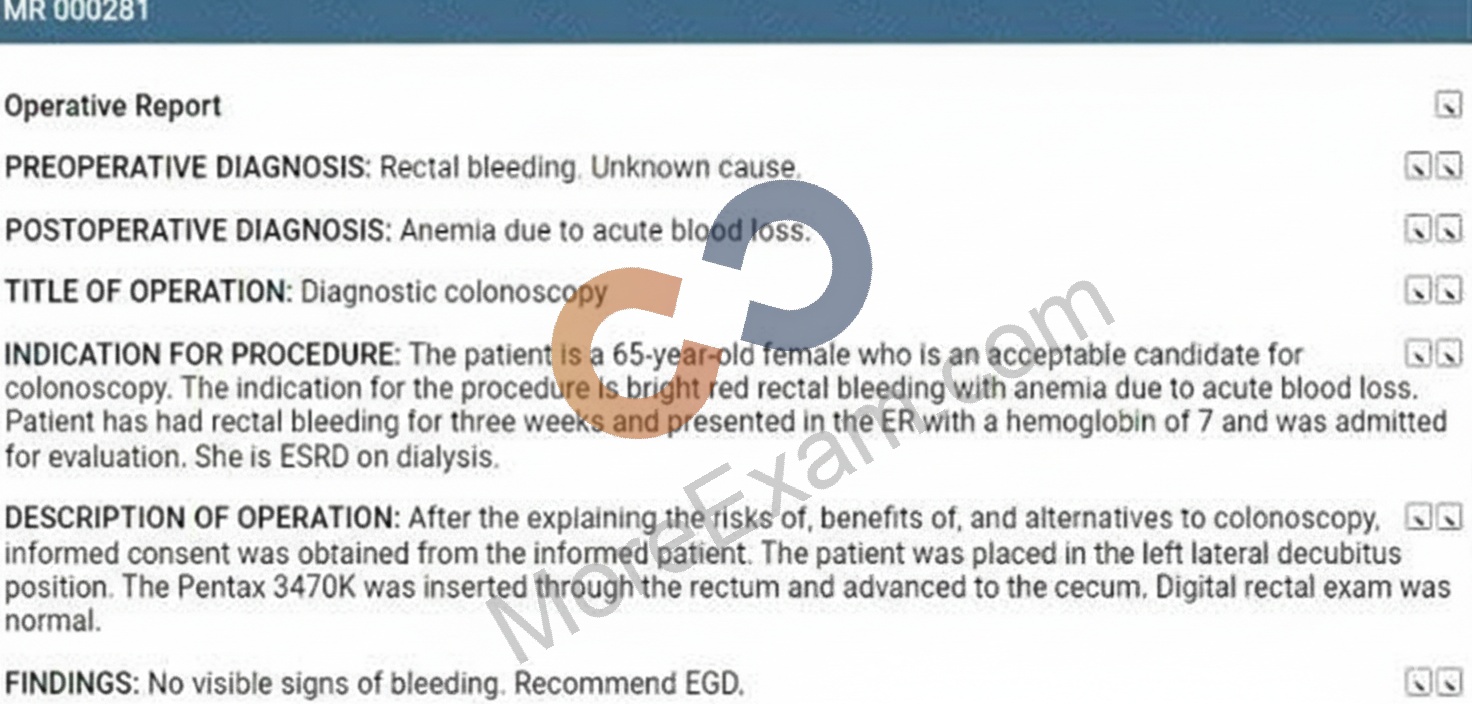
View MR 000281
What anesthesia and diagnosis codes are reported for this case?

Question91: The spleen is in what organ system?

Question92: Patient has cervical spondylosis with myelopathy. The surgeon performed a bilateral posterior laminectomy with facetectomies at each level and foraminotomies performed between interspaces C5-C6 and C6-C7.
Bilateral decompression of the nerve roots is achieved.
What CPT coding is reported?

Question93: A patient presents with recurrent spontaneous episodes of dizziness of unclear etiology. Caloric vestibular testing is performed irrigating both ears with warm and cold water while evaluating the patient's eye movements. There is a total of three irrigations.
What CPT coding is reported?

Question94: The gynecologist performs a colposcopy of the cervix including biopsy and endocervical curettage.
What CPT code is reported?

Question95: A couple presents to the freestanding fertility clinic to start in vitro fertilization. Under radiologic guidance, an aspiration needle is inserted (by aid of a superimposed guiding-line) puncturing the ovary and preovulatory follicle and withdrawing fluid from the follicle containing the egg.
What is the correct CPT code for this procedure?

Question96: Which one of the following is an example of a case in which a diabetes-related problem exists and the code for diabetes is never sequenced first?

Question97: A 47-year-old male recently injured as a passenger in a car accident sustained multiple fractures. The patient now has physical restraints due to pulling out foley catheter, IV catheters and attempted to pull out NG tube. Emergency department physician is asked to come see patient and injects 0.5 lidocaine into lumbar region of the spine. An indwelling catheter is placed into the lumbar region for continuous infusion with fluoroscopy for pain management.
What CPTis reported for the Emergency department physician?