EMT Practice Test

1. Question Content...


Question List
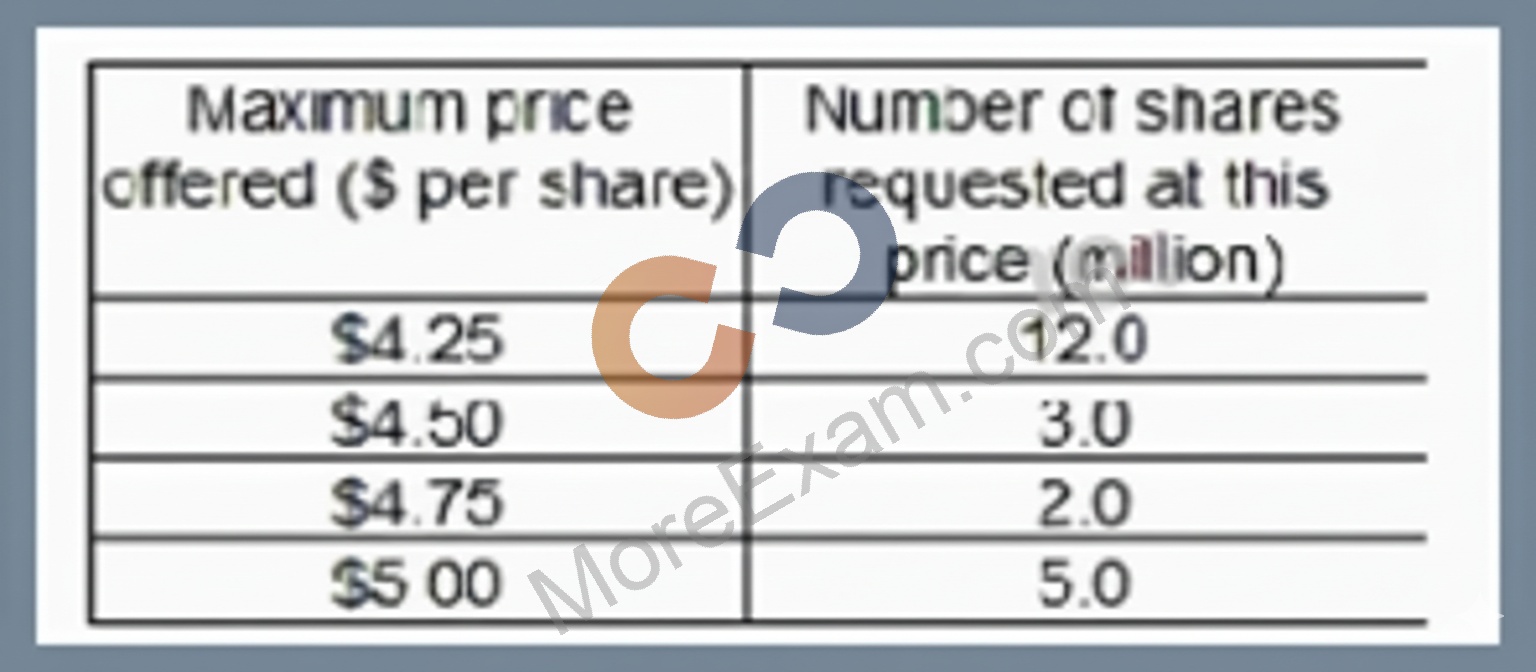
Question1: Company C invests heavily in Research and Development an need to raise $45 million to finance future projects. It has decided to use equity finance raised by a tender offer, The following tender offers have been received from potential investors:

Company C wishes to select an offer price that will project shareholders from a significant dilution of control but still raise the required amount of finance.
What offer price should Company C's select?

Question2: A company has just received a hostile bid. Which of the following response strategies could be considered?

Question3: Company A is subject to a takeover bid from Company B, both companies operate in the same industry and each of them demand a significant market share Company B h3S made an of an of $5 per share to the shareholders of Company A.
The directors of Company A do not believe the takeover would be h the best interests of the stakeholders and other stakeholders of Company A due to the following reruns
1. Company B has recently taken ever several ether companies resulting in them breaking up the company and se ling on the assets.
2 The directors of Company A believe the offer of $5 per snare undervalues tie company The directors of Company A are therefore keen to prevent the bid from going ahead Which THREE of the following defence strategies could be used by the directors of Company Air this situation?

Question4: The directors of a financial services company need to calculate a valuation of their company's equity in preparation for an upcoming initial Public Offering (IPO) of shares. At a recent board meeting they discussed the various methods of business valuation.
The Chief Executive suggested using a Price-earing (P./E) method of valuation, but the finance Director argued that a valuation based on forecast cash flows to equity would be more appropriate.
Which THREE of the following are advantages of valuation based on forecast cash flows to equity, compared to a valuating using a price earnings methods?

Question5: An unlisted software development company has recently reported disappointing results. This was partly due to weak economic conditions but also because of its poor competitive position. The company has a number of exciting development opportunities which would enable it to achieve significant future growth. The company's growth potential has been hindered by its inability to secure sufficient new finance.
To enable the company raise new finance the Directors are considering working forwards an IPO in 10 years and accepting finance from a venture capitalist in order support in the intervening period.
The directors are keen to retain a controlling stake in the company and full representation on the board. They therefore require venture capitalists to provide funds as a mix of debt and equity and not soley equity finance.
Which THREE of the following are most likely to disrupt the directors' plans to use venture capital finance?

Question6: A company generates and distributes electricity and gas to households and businesses.
Forecast results for the next financial year are as follows:
The Industry Regulator has announced a new price cap of $1.50 per Kilowatt.
The company expects this to cause consumption to rise by 10% but costs would remained unaltered.
The price cap is expected to cause the company's net profit to fall to:

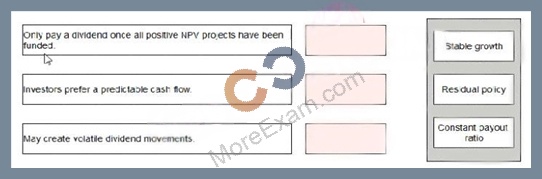
Question7: Select the most appropriate divided for each of the following statements:
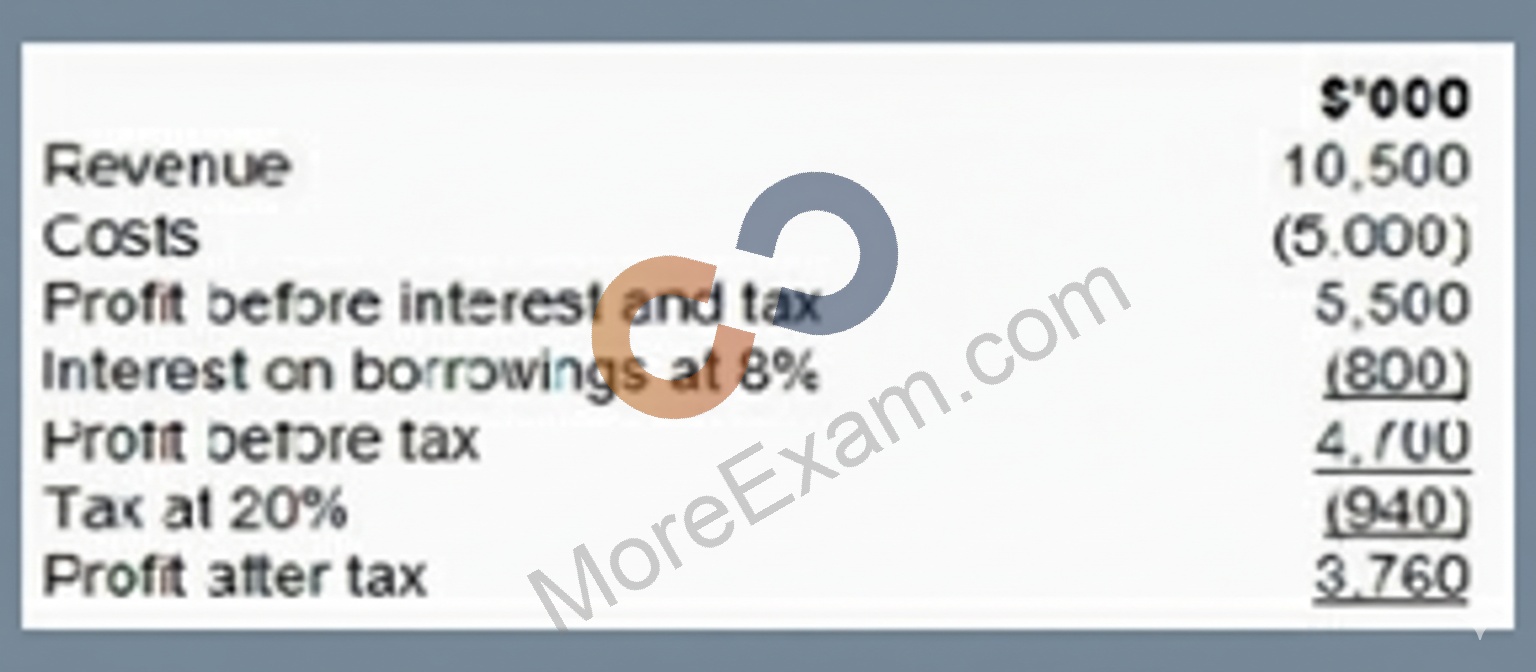
Question8: Two companies that operate in the same industry have different Price/Earnings (P/E) ratios as follows:
Which of the following is the most likely explanation of the different P/E ratios?

Question9: A company is wholly equity funded. It has the following relevant data:
* Dividend just paid $4 million
* Dividend growth rate is constant at 5%
* The risk free rate is 4%
* The market premium is 7%
* The company's equity beta factor is 1.2
Calculate the value of the company using the Dividend Growth Model.
Give your answer in $ million to 2 decimal places.
$ ? million

Question10: Hospital X provides free healthcare to all members of the community, funded by the central Government.
Hospital Y provides healthcare which has to be paid for by the individual patients. It is a listed company, owned by a large number of shareholders.
In comparing the above two organisations and their objectives, which THREE of the following statements are correct?

Question11: A company wishes to raise new finance using a rights issue to invest in a new project offering an IRR of 10% The following data applies:
* There are currently 1 million shares in issue at a current market value of $4 each.
* The terms of the rights issue will be $3.50 for 1 new share for 5 existing shares.
* The company's WACC is currently 8%.
What is the yield-adjusted theoretical ex-rights price (TERP)?
Give your answer to 2 decimal places.
$ ?

Question12: A company plans to raise $12 million to finance an expansion project using a rights issue.
Relevant data:
* Shares will be offered at a 20% discount to the present market price of $15.00 per share.
* There are currently 2 million shares in issue.
* The project is forecast to yield a positive NPV of $6 million.
What is the yield-adjusted Theoretical Ex-Rights Price following the announcement of the rights issue?

Question13: A company is considering whether to lease or buy an asset.
The following data applies:
* The bank will charge interest at 7.14% per annum
* The asset will cost $1 million
* Tax-allowable depreciation is available on a straight line basis over 5 years
* There is no residual value
* Corporate tax is paid at 30% in the year when the profit is earned
What is the NPV of the buy option?
Give your answer to the nearest $000.
$ ?

Question14: A company is currently all-equity financed.
The directors are planning to raise long term debt to finance a new project.
The debt:equity ratio after the bond issue would be 30:60 based on estimated market values.
According to Modigliani and Miller's Theory of Capital Structure without tax, the company's cost of equity would:

Question15: A consultancy company is dependent for profits and growth on the high value individuals it employs.
The company has relatively few tangible assets.
Select the most appropriate reason for the net asset valuation method being considered unsuitable for such a company.

Question16: A company has a loss-making division that it has decided to divest in order to raise cash for other parts of the business.
The losses stem from a combination of a lack of capital investment and poor divisional management.
The loss-making division would require new capital investment of at least $20 million in order to replace worn out and obsolete assets.
If this investment was carried out, the present value of the future cashflows, excluding the investment expenditure, is expected to be $15 million.
Which TWO of the following divestment methods are most likely to be suitable for the company?

Question17: The International Integrated Reporting Council (IIRC) was formed in August 2010 and brings together a cross-section of representatives from a wide variety of business sectors.
The primary purpose of the IIRC's framework is to help enable an organsation to communicate how it:

Question18: A company plans to acquire new machinery.
It has two financing options; buy outright using a bank loan, or a finance lease.
Which of the following is an advantage of a finance lease compared with a bank loan?

Question19: A company is considering taking out $10.000,000 of floating rate bank borrowings to finance a new project.
The current rate available to the company on floating rate barrowings is 8%. The borrowings contain a covenant based on an interested cover of 5 times.
The project is expected to generate the following results:

At what interest rate on the floating rate borrowings is the bank covenant first breached?

Question20: A company has a covenant on its 5% long-term bond, stipulating that its retained earnings must not fall below
$2 million.
The company has 100 million shares in issue.
Its most recent dividend was $0.045 per share. It has committed to grow the dividend per share by 4% each year.
The nominal value of the bond is $60 million. It is currently trading at 80% of its nominal value.
Next year's earnings before interest and taxation are projected to be $11.25 million.
The rate of corporate tax is 20%.
If the company increases the dividend by 4%, advise the Board of Directors if the level of retained earnings will comply with the covenant?

Question21: Select the category of risk for each of the descriptions below:
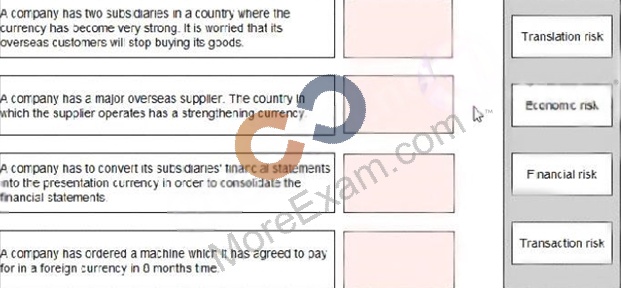
Question22: Company F's current profit before interest and taxation is $5.0 million.
It has a 10% long-term corporate bond in issue with a nominal value of $10 million.
Corporate tax is paid at 25%.
The industry average P/E multiple is 10.
Company X has made an approach to acquire the entire share capital of Company F for $30 million.
Company X has announced that anticipated synergies (after interest and taxation) arising from its acquisition of Company F will be $1 million each year in perpetuity.
Advise the Board of Directors of Company F if the bid should be accepted, based on the above information?

Question23: Company R is a major food retailer. It wishes to acquire Company S, a food manufacturer.
Company S currently supplies many stores owned by Company R with food products that it manufactures.
Company S is of similar size to Company R but has a lower credit rating.
Which of the following is most likely to be a synergistic benefit to R on purchasing S?

Question24: Company A is proposing a rights issue to finance a new investment. Its current debt to equity ratio is 10%.
Which TWO of the following statements are true?

Question25: A company is concerned that a high proportion of its debt portfolio consists of variable rate finance with an interest rate of LIBOR ' 1 .0%.
It is considering using an interest rate swap to reduce interest rate risk out is concerned about additional finance cost this might create.
A bank has quoted swap rates of 3% 3.5% against LIBOR.
Is an interest rate swap likely to be beneficial to the company at current LIBOR rates?

Question26: A company's dividend policy is to pay out 50% of its earnings.
Its most recent earnings per share was $0.50, and it has just paid a dividend per share of $0.25.
Currently, dividends are forecast to grow at 2% each year in perpetuity and the cost of equity is 10.5%.
In order to grow its earnings and dividends, the company is considering undertaking a new investment funded entirely by debt finance. If the investment is undertaken:
* Its cost of equity will immediately increase to 12% due to the increased finance risk.
* Its earnings and dividends will immediately commence growing at 4% each year in perpetuity.
Which of the following is the expected percentage change in the share price if the new investment is undertaken?

Question27: Which THREE of the following non-financial objectives would be most appropriate for a listed company in the food retailing industry?

Question28: A company in country T is considering either exporting its product directly to customers in country P or establishing a manufacturing subsidiary in country P.
The corporate tax rate in country T is 20% and 25% tax depreciation allowances are available Which TIIRCC of the following would be considered advantages of establishing a subsidiary in country T?

Question29: A company has:
* A price/earnings (P/E) ratio of 10.
* Earnings of $10 million.
* A market equity value of $100 million.
The directors forecast that the company's P/E ratio will fall to 8 and earnings fall to $9 million.
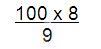
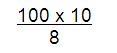
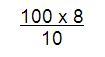
Which of the following calculations gives the best estimate of new company equity value in $ million following such a change?
A)

B)

C)

D)

Question30: A company has accumulated a significant amount of excess cash which is not required for investment for the foreseeable future.
It is currently on deposit, earning negligible returns.
The Board of Directors is considering returning this excess cash to shareholders using a share repurchase programme.
The majority of shareholders are individuals with small shareholdings.
Which THREE of the following are advantages of the company undertaking a share repurchase programme?

Question31: A company has convertible bonds in issue.
The following debt is apply (31 December 20X0):
* Conversion ratio- 20 shares for each $130 bond.
* Current share price - $4 50
* Expected annual growth in share price - 5%
Advise the bond Holder at which date the convers on would be worthwhile?

Question32: A large, listed company is planning a major project that should greatly improve its share price in the long term.
These plans require a significant capital cost that the company plans to finance by debt.
All of the debt options being considered are for the same duration of time.
Which of the following sources of debt finance is likely to be the most expensive for the company over the full term of the debt?

Question33: An unlisted company:
* Is owned by the original founder and member of their families.
* Is growing more rapidly than other companies in the same industry.
* Pays a fixed annual divided
Which of the following methods would be the most appropriate to value this company's equity?

Question34: An all equity financed company reported earnings for the year ending 31 December 20X1 of $5 million.
One of its financial objectives is to increase earnings by 5% each year.
In the year ending 31 December 20X2 it financed a project by issuing a bond with a $1 million nominal value and a coupon rate of 7%.
The company pays corporate income tax at 30%.
If the company is to achieve its earnings target for the year ending 31 December 20X2, what is the minimum operating profit (profit before interest and tax) that it must achieve?

Question35: The ex div share price of a company's shares is $2.20.
An investor in the company currently holds 1,000 shares.
The company plans to issue a scrip dividend of 1 new share for every 10 shares currently held.
After the scrip dividend, what will be the total wealth of the shareholder?
Give your answer to the nearest whole $.
$ ? .

Question36: A company has a financial objective of maintaining a gearing ratio of between 30% and 40%, where gearing is defined as debt/equity at market values.
The company has been affected by a recent economic downturn leading to a shortage of liquidity and a fall in the share price during 20X1.
On 31 December 20X1 the company was funded by:
* Share capital of 4 million $1 shares trading at $4.0 per share.
* Debt of $7 million floating rate borrowings.
The directors plan to raise $2 million additional borrowings in order to improve liquidity.
They expect this to reassure investors about the company's liquidity position and result in a rise in the share price to $4.2 per share.
Is the planned increase in borrowings expected to help the company meet its gearing objective?

Question37: A company is concerned about the interest rate that it will be required to pay on a planned bond issue.
It is considering issuing bonds with warrants attached.
Advise the directors which of the following statements about warrants is NOT correct?

Question38: A company is currently all-equity financed with a cost of equity of 8%.
It plans to raise debt with a pre-tax cost of 4% in order to buy back equity shares.
After the buy-back, the debt-to-equity ratio at market values will be 1 to 2.
The corporate income tax rate is 30%.
Which of the following represents the company's cost of equity after the buy-back according to Modigliani and Miller's Theory of Capital Structure with taxes?

Question39: A listed company in a high technology industry has decided to value its intellectual capital using the Calculated Intangible Value method (CIV).
Relevant data for the company:
* Pays corporate income tax at 30%
* Cost of equity is 9%, pre-tax cost of debt is 7% and the WACC is 8%
* The value spread has been calculated as $26 million
Calculate the CIV for the company.

Question40: TU has relatively few tangible assets and is dependent for profits and growth on the high-value individuals it employs. Which of the following statements best explains why the net asset valuator method's considered unstable for TU?

Question41: Company M's current profit before interest and taxation is $5.0 million.
It has a long-term 10% corporate bond in issue with a nominal value of $10 million.
The rate of corporate tax is 25%.
It plans to continue to pay out 50% of its earnings in dividends and earnings are expected to grow by 3% each year in perpetuity.
Its cost of equity is 10%.
Using the dividend growth model, advise the Board of Directors of Company M which of the following provide a reasonable valuation of Company M's equity?

Question42: On 1 January:
* Company X has a value of $50 million
* Company Y has a value of $20 million
* Both companies are wholly equity financed
Company X plans to take over Company Y by means of a share exchange. Following the acquisition the post-tax cashflow of Company X for the foreseeable future is estimated to be $8 million each year. The post-acquisition cost of equity is expected to be 10%.
What is the best estimate of the value of the synergy that would arise from the acquisition?

Question43: A company financed by equity and debt can be valued by discounting:
Question44: Company A has made an offer to take over all the shares in Company B on the following terms:
* For every 20 shares currently held, Company B's shareholders will receive $100 bond with a coupon rate of 3%
* The bond will be repaid in 10 years' time at its par value of $100.
* The current yield on 10 year bonds of similar risk is 6%.
What is the effective offer price per share being made to Company B's shareholders?

Question45: A large, listed company in the food and household goods industry needs to raise $50 million for a period of up to 6 months.
It has an excellent credit rating and there is almost no risk of the company defaulting on the borrowings. The company already has a commercial paper programme in place and has a good relationship with its bank.
Which of the following is likely to be the most cost effective method of borrowing the money?

Question46: Z wishes to borrow at a floating rate and has been told that it can use swaps to reduce the effective interest rate it pays. Z can borrow floating at Libor ' 1, and fixed at 10%.
Which of the following companies would be the most appropriate for Z to enter into a swap with?

Question47: Company M is a listed company in a highly technical service industry.
The directors are considering making a cash offer for the shares in Company Q, an unquoted company in the same industry.
Relevant data about Company Q:
* The company has seen consistent growth in earnings each year since it was founded 10 years ago.
* It has relatively few non-current assets.
* Many of the employees are leading experts in their field. A recent exercise suggested that the value of the company's human capital exceeded the value of its tangible assets.
The directors and major shareholders of Company Q have indicated willingness to sell the company.
Before negotiations become too advanced, the directors of Company M are considering the benefits to their company that would follow the acquisition.
Which THREE of the following are the most likely benefits of the acquisition to Company M's shareholders?

Question48: A company's gearing (measured as debt/(debt + equity)) is currently 60% and it is investigating whether an optimal gearing structure exists within the industry.
It has analysed the capital structure of similar companies in the industry and it would appear that there is evidence supporting the traditional theory of capital structure.
Companies with the lowest WACC in the industry have gearing of around 45% to 50%.
Which of the following actions would result in the company achieving a more optimal capital structure?

Question49: A company aims to increase profit before interest and tax (PBIT) each year.
The company reports in A$ but has significant export sales priced in B$.
All other transactions are priced in A$.
In 20X1, the company reported:
In 20X2, the only changes expected are:
* An increase in export prices of 10%, but no change to units sold.
* A rise in the value of the B$ to A$/B$ 2.500 (that is, A$ 1 = B$ 2.5) Is it likely that the company would still meet its objective to grow PBIT between 20X1 and 20X2?

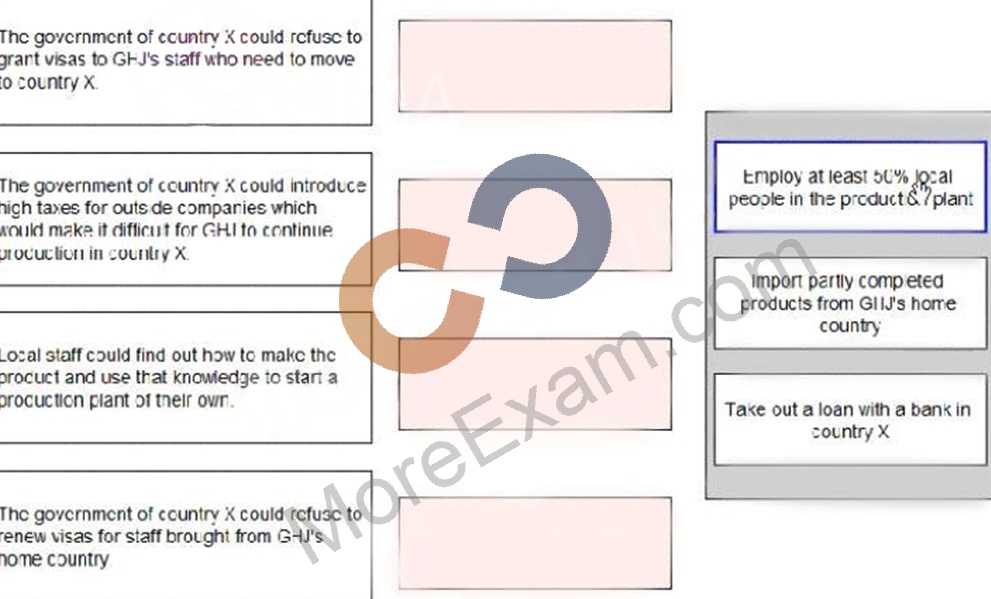
Question50: CI IJ has decided to move its production plant to overseas country X.
This would make the product cheaper to produce.
The technology used to make the product is very advanced and some of the skilled staff would have to move to country X.
The Production Director has identified that there are some political risks in moving to county X.
For each of the political risks of moving to country X shown below, select the correct method for reducing the risk.

Question51: Two listed companies in the same industry are joining together through a merger.
What are the likely outcomes that will occur after the merger has happened?
Select ALL that apply.

Question52: The ex div share price of Company A's shares is $.3.50
An investor in Company A currently holds 2,000 shares.
Company A plans to issue a script divided of 1 new shares for every 10 shares currently held.
After the scrip divided, what will be the total wealth of the shareholder?
Give your answer to the nearest whole $.

Question53: Company W has received an unwelcome takeover bid from Company B.
The offer is a share exchange of 3 shares in Company B for 5 shares in Company W or a cash alternative of $5.70 for each Company W share.
Company B is approximately twice the size of Company W based on market capitalisation. Although the two companies have some common business interested the main aim of the bid is diversification for Company B.
Company W has substantial cash balances which the directors were planning to use to fund an acquisition.
These plans have not been announced to the market.
The following share price information is relevant.

Which of the following would be the most appropriate action by Company W's directors following receipt of this hostile bid?

Question54: Which of the following statements is true of a spin-off (or demerger)?

Question55: The Treasurer of Z intends to use interest rate options to set an interest rate cap on Z's borrowings.
Which of the following statement is correct?

Question56: Modigliani and Miller are the main proponents of the view that the dividend policy is irrelevant to the value of a company's shares.
They argue that a company that continually reinvests its entire earnings would generate the same shareholder wealth if it engaged in a policy of high dividends and financed its expansion with funds obtained from rights issues.
Which THREE of the following statements are assumptions that are required in order to support this proposition?

Question57: A venture capitalist invests in a company by means of buying:
* 9 million shares for $2 a share and
* 8% bonds with a nominal value of $2 million, repayable at par in 3 years' time.
The venture capitalist expects a return on the equity portion of the investment of at least 20% a year on a compound basis over the first 3 years of the investment.
The company has 10 million shares in issue.
What is the minimum total equity value for the company in 3 years' time required to satisify the venture capitalist's expected return?
Give your answer to the nearest $ million.
$ million.

Question58: Company Z has just completed the all-cash acquisition of Company A.
Both companies operate in the advertising industry.
The market considered the acquisition a positive strategic move by Company Z.
Which THREE of the following will the shareholders of Company Z expect the company's directors to prioritise following the acquisition?

Question59: A private company manufactures goods for export, the goods are priced in foreign currency B$.
The company is partly owned by members of the founding family and partly by a venture capitalist who is helping to grow the business rapidly in preparation for a planned listing in three years' time.
The company therefore has significant long term exposure to the B$.
This exposure is hedged up to 24 months into the future based on highly probable forecast future revenue streams.
The company does not apply hedge accounting and this has led to high volatility in reported earnings.
Which of the following best explains why external consultants have recently advised the company to apply hedge accounting?

Question60: A listed company in a high growth industry, where innovation is a key driver of success has always operated a residual dividend policy, resulting in volatility in dividends due to periodic significant investments in research and development.
The company has recently come under pressure from some investors to change its dividend policy so that shareholders receive a consistent growing dividend. In addition, they suggested that the company should use more debt finance.
If the suggested change is made to the financial policies, which THREE of the following statements are true?

Question61: Company A is planning to acquire Company B by means of a cash offer. The directors of Company B are prepared to recommend acceptance if a bid price can be agreed. Estimates of the net present value (NPV) of future cash flows for the two companies and the combined group post acquisition have been prepared by Company A's accountant. There are as follows:
What is the maximum price that Company A should offer for the shares in Company B?
Give your answer to the nearest $ million

Question62: Company A plans to acquire Company B, an unlisted company which has been in business for 3 years.
It has incurred losses in its first 3 years but is expected to become highly profitable in the near future.
No listed companies in the country operate the same business field as Company B, a unique new high- risk business process.
The future success of the process and hence the future growth rate in earnings and dividends is difficult to determine.
Company A is assessing the validity of using the dividend growth method to value Company B.
Which THREE of the following are weaknesses of using the dividend growth model to value an unlisted company such as Company B?

Question63: A company generates and distributes electricity and gas to households and businesses.
Forecast results for the next financial year are as follows:

The Industry Regulator has announced a new price cap of $2.00 per Kilowatt.
The company expects this to cause consumption to rise by 15% but costs would remained unaltered.
The price cap is expected to cause the company's net profit to fall to:

Question64: H Company has a fixed rate load at 10.0%, but wishes to swap to variable. It can borrow at LIBOR 8%.
The bank is currently quoting swap rates of 3.1% (bid) and 3.5% (ask).
What net rate will H Company pay if it enters into the swap?

Question65: Which THREE of the following long term changes are most likely to increase the credit rating of a company?

Question66: A listed company in the retail sector has accumulated excess cash.
In recent years, it has experienced uncertainly with forecasting the required level of cash for capital expenditure due to unpredictable economic cycles.
Its excess cash is on deposit earning negligible returns.
The Board of Directors is considering the company's dividend policy, and the need to retain cash in the company.
Which THREE of the following are advantages of retaining excess cash in the company?

Question67: The Board of Directors of Company T is considering a rights issue to fund a new investment opportunity which has a zero NPV.
The Board of Directors wishes to explain to shareholders what the theoretical impact on their wealth will be as a result of different possible actions during the rights issue.
Which THREE of the following statements in respect of theoretical shareholder wealth are true?

Question68: The competition authorities are investigating the takeover of Company Z by a larger company, Company Y.
Both companies are food retailers.
The takeover terms involve using a part cash, part share exchange means of payment.
Company Z is resisting the bid, arguing that it undervalues its business, while lobbying extensively among politicians to sway public opinion against the bidder.
Which of the following actions by Company Y is most likely to persuade the competition authorities to approve the acquisition?

Question69: Which THREE of the following are considered in detail in IFRS 7 Financial Instruments: Disclosures?

Question70: A company has forecast the following results for the next financial year:
The following is also relevant:
* Profit after tax for the year can be assumed to be equivalent to free cash flow for the year.
* Debt finance comprises a $10 million floating rate loan which currently carries an interest rate of 5%.
* $400,000 investment in non-current assets is required to achieve required growth, all of which is to financed from next year's free cash flow.
* The company plans to pay a dividend of $150,000 next year, financed from next year's free cash flow.
The company is concerned that interest rates could rise next year to 6% which could then affect their investment plans.
If interest rates were to rise to 6% and the company wishes to maintain its dividend amount, the planned investment expenditure will decrease by:

Question71: A listed company plans to raise $350 million to finance a major expansion programme.
The cash flow projections for the programme are subject to considerable variability.
Brief details of the programme have been public knowledge for a few weeks.
The directors are considering two financing options, either a rights issue at a 20% discount to current share price or a long term bond.
The following data is relevant:
The company's share price has fallen by 5% over the past 3 months compared with a fall in the market of 3% over the same period.
The directors favour the bond option.
However, the Chief Accountant has provided arguments for a rights issue.
Which TWO of the following arguments in favour of a right issue are correct?

Question72: Company B is an all equity financed company with a cost of equity of 10%.
It is considering issuing bonds in order to achieve a gearing level of 20% debt and 80% equity.
These bonds will pay a coupon rate of 5% and have an interest yield of 6%.
Company B pays corporate tax at the rate of 25%.
According to Modigliani and Miller's theory of capital structure with tax, what will be Company B's new cost of equity?
A)

B)

C)

D)

Question73: A venture capitalist has made an equity investment in a private company and is evaluating possible methods by which it can exit the investment over the next 3 years. The private company shareholders comprise the four original founders and the venture capitalist.
Advise the venture capitalist which THREE of the following methods will enable it to exit its equity investment?

Question74: A company's statement of financial position includes non-current assets which are leased, the tax regime follows the accounting treatment.
Which cash flows should be discounted when evaluating the cost of lease finance?