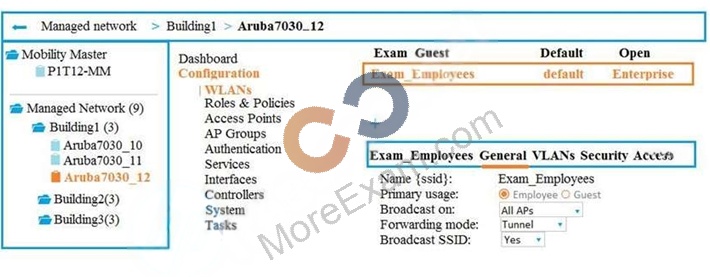
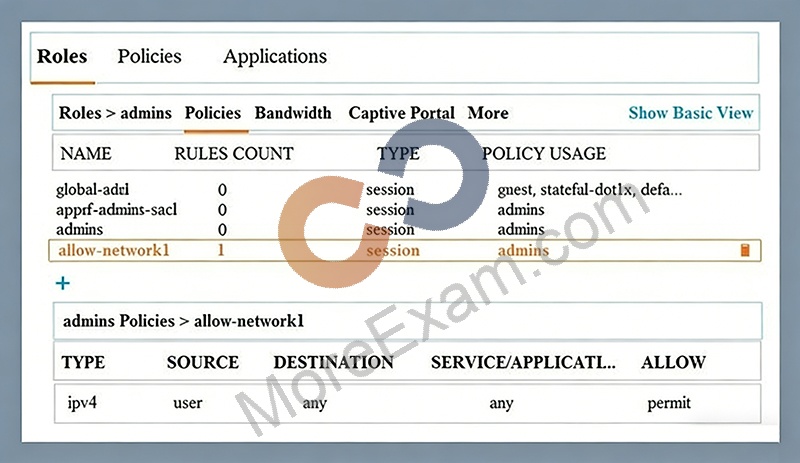
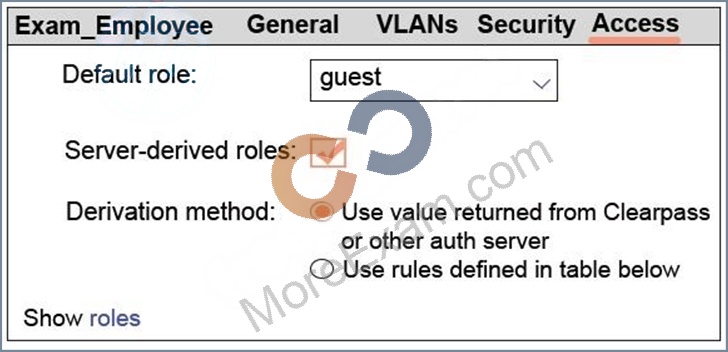
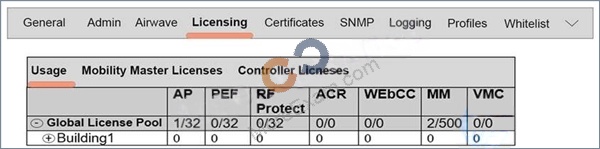
EMT Practice Test

1. Question Content...


Question List
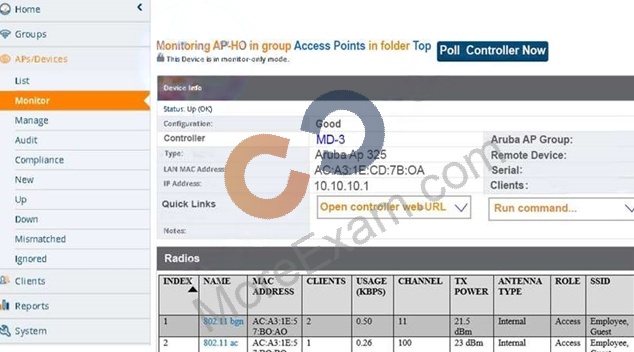
Question1: A network administrator monitors an Aruba Mobility Controller with Aruba AirWave and sees the configuration status is Error. What should the administrator conclude?

Question2: Refer to the exhibit.

A network administrator needs to use Aruba AirWave to view statistics for an AP's 802.11ac radio. How can the administrator update the information on-demand rather than wait the typical interval?

Question3: How can network administrator provide high availability for APs deployed in an Aruba Mobility Master (MM)-based architecture?

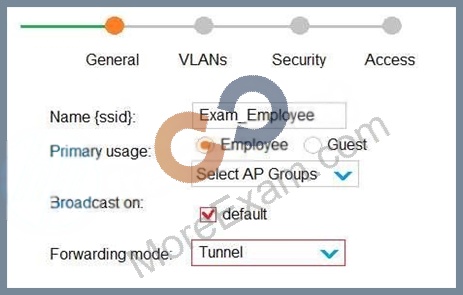
Question4: If the decrypt-tunnel forwarding mode is selected in an employee WLAN, where is the user traffic decrypted?

Question5: What is a valid way to deploy an Aruba Mobility Master (MM)?

Question6: A company has a Mobility Master (MM)-based solution. A network administrator wants to monitor the types of applications in use in the wireless network.
Which dashboard page in the MM interface should the administrator visit?

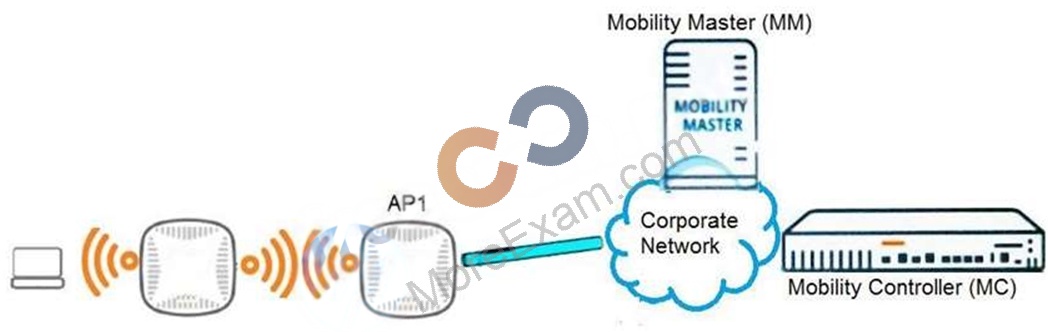
Question7: Refer to the exhibit.

Which role must AP1 play?

Question8: A company deploys an Aruba wireless solution for the first time. In which deployment is clustering supported?

Question9: A company has an Aruba Mobility Master (MM)-based solution. A network administrator wants to collect and analyze information about clients and access points (APs) over extended periods of time.
What should the administrator do to achieve this goal?

Question10: How does a high-gain omni-directional antenna compare to a typical omni-directional antenna?

Question11: A company has an Aruba Mobility Master (MM)-based solution with a WLAN that assigns users to VLANs
10-19. The company wants the Aruba solution to act at Layer 3 to route wireless user traffic.
What must network administrators configure to permit the solution to forward traffic correctly?

Question12: A company has an Aruba solution and wants to provide guests with wireless access. The company wants to assign guests IP addresses in subnets that exist only within the Aruba solution.
Which feature should network administrators set up so guests can send traffic on the Internet without changes to the company routing solution?

Question13: A company has a Mobility Master (MM)-based solution. A network administrator wants to monitor data transfer speed ranges of all currently connected clients.
Which dashboard page in the MM interface should the administrator visit?

Question14: A company has a Mobility Master (MM)-based solution with an employee WLAN Several users report that they can connect to the WLAN, but they cannot access all of the resources that they should.
Where should the network administrator look in the MM interface to find the roles to which these users are actually assigned?

Question15: A company has a Mobility Master (MM)-based solution. How does a Mobility Controller (MC) behave if it loses contact with all MM nodes?

Question16:
What describes the behavior for this WLAN?
Question17: A WLAN in an Aruba Mobility Master (MM)-based solution uses WPA2-Enterprise security. This WLAN currently authenticates users to Active Directory (AD), and users log in with their Windows domain credentials. Network administrators now want to authenticate the Windows clients as well, based on the client Computer Names.
What should the administrators do on MM to achieve this goal?

Question18: Refer to the exhibit.

A network administrator needs to use Aruba AirWave to view statistics for an AP's 802.11ac radio. How can the administrator update the information on-demand rather than wait the typical interval?

Question19: A network administrator adds several new APs to an Aruba solution that uses AirMatch. The administrator does not want to change the channel for the existing APs, but wants the new APs to receive a provisional plan for their channels and power.
What should the administrator do to meet this goal?

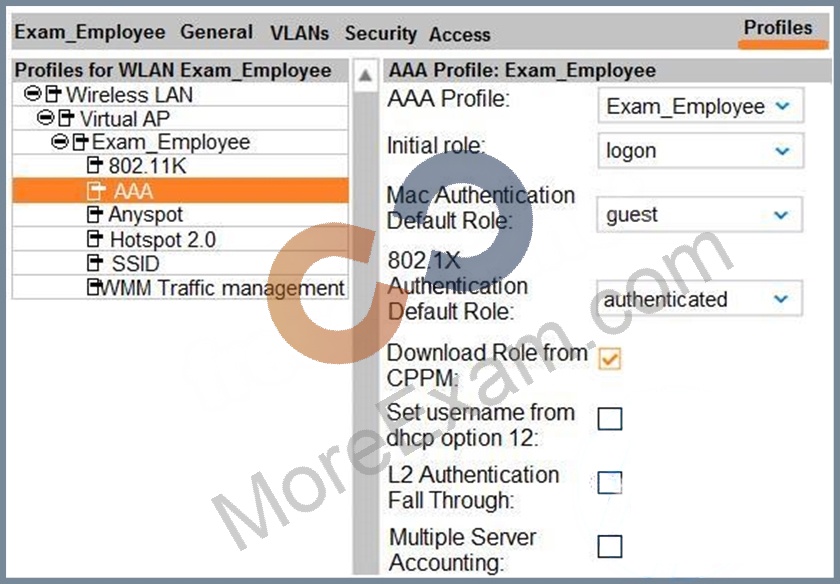
Question20: Refer to the exhibit.

The exhibit shows the AAA profile for a WLAN on an Aruba solution. This WLAN uses 802.1X to authenticate users to a RADIUS server. A user successfully authenticates with 802.1X, but the RADIUS server does not send a role assignment.
How does the Aruba firewall handle the role assignment for this user?

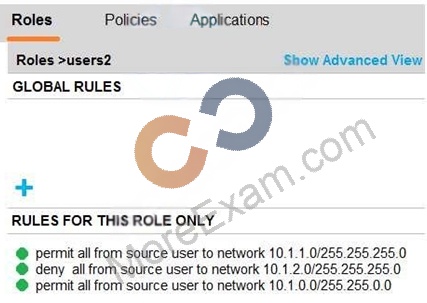
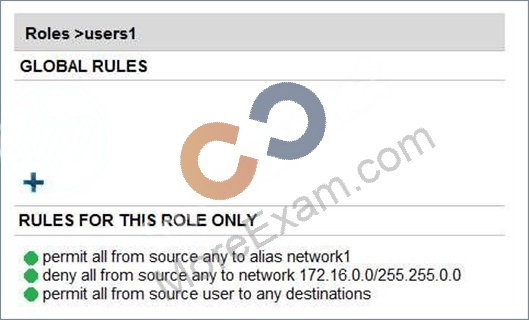
Question21: Refer to the exhibits.
Exhibit 1

Exhibit 2

A company has an Aruba solution. Client 1 is assigned to the users1 role, and Client 2 is assigned to the users2 role. The exhibits show current firewall rules for those roles. The network1 alias used to be 10.1.1.0/24, but the network administrator now changes the network1 alias to 172.16.1.0/24. Client 1 and Client 2 both then send a packet destined to 172.16.1.10.
How does the firewall handle these packets?

Question22: Which Mobility Master (MM) dashboard should an administrator access to view a list of rogue and interfering APs?

Question23: A company has an Aruba Mobility Master (MM)-based solution. Under which circumstance will an AP radio change channel without the use of the Mobility Master (MM)?

Question24: A network administrator needs to create an Aruba firewall rule that permits wireless users to receive DHCP settings when they first connect to the Aruba solution. What are the correct source and destination aliases for the rule?

Question25: A company currently uses Instant APs (IAPs), all managed by a virtual controller. The company expects to double in size without the next 18 months. The network manager wants to purchase additional APs to service the increased traffic load. The network manager also wants to deploy a Mobility Controller (MC) to manage all APs.
How should the network administrator adapt the current IAPs to a controlled architecture?

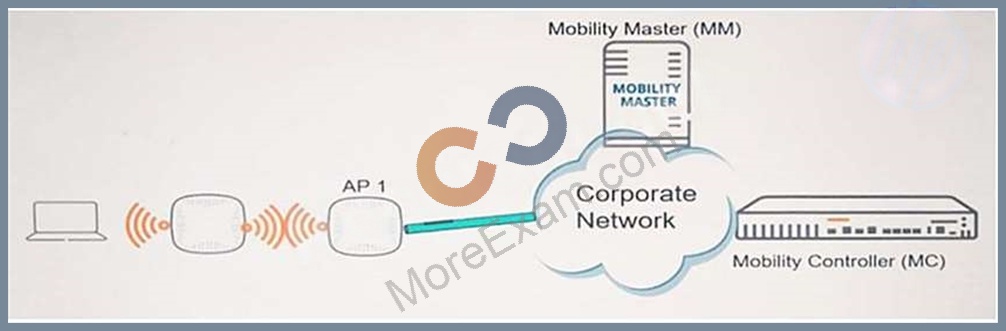
Question26: Refer to the exhibit.

Which role must AP 1 play?

Question27: A WLAN in an Aruba Mobility Master (MM)-based solution uses WPA2-Enterprise security. This WLAN currently authenticates users to Active Directory (AD), and users log in with their Windows domain credentials.
Network administrators now want to authenticate the Windows clients as well, based on the client Computer Names.
What should the administrator do on MM to achieve this goal?

Question28: A WLAN in an Aruba Mobility Master (MM)-based solution enforces Enterprise-WPA2 security and uses the tunnel forwarding mode. The company has an external RADIUS server.
Which device exchanges RADIUS packets with the RADIUS server?

Question29: Refer to the exhibit.

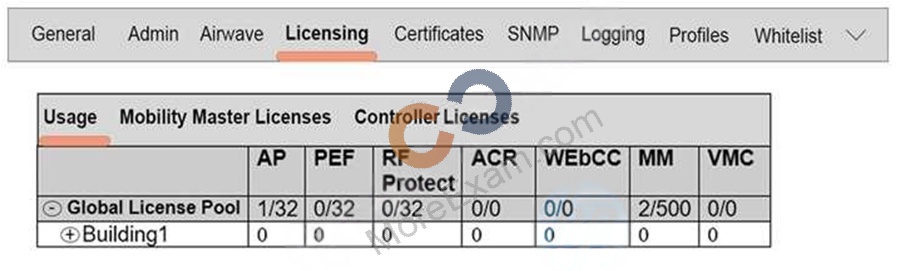
Based on the exhibit, what is the maximum number of APs that this Mobility Master (MM) solution can support?

Question30: A customer has a large campus that requires 400 Aruba 335 APs to support a total of 20,000 wireless users and
12Gbps of traffic. Although the customer wants two controllers for redundancy, each controller must be able to support all of the APs and users on its own.
Which Aruba Mobility Controller models meet the customer requirements and DO NOT unnecessarily exceed them?

Question31: A company has an Aruba solution that supports an employee WLAN. How can network administrators control in which subnets users receive IP addresses?

Question32: Exhibit 1

Exhibit 2

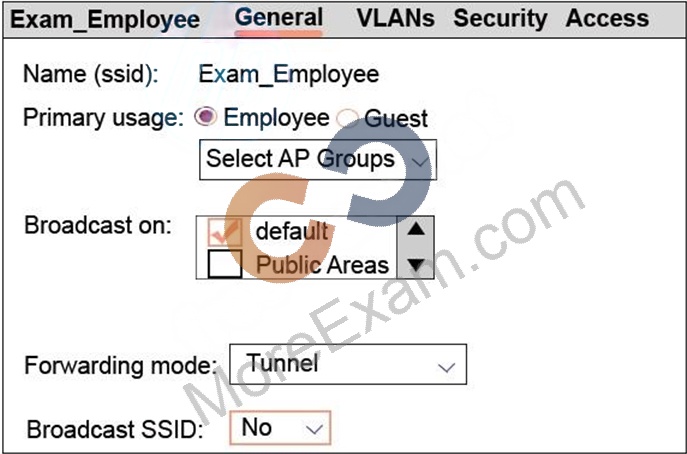
A company has an Aruba Mobility Master (MM)-based solution and needs a new WLAN for the corporate campus. A network administrator completes the creation of this WLAN, as shown in Exhibit 1. When administrators try to test a connection to the WLAN, the WLAN does not show up in the list of WLANs on the client. The administrator can see the WLAN in the list, as shown in Exhibit 2.
What is the error?

Question33: A company has an Aruba Mobility Master (MM)-based solution that runs ArubaOS 8 and uses the default AirMatch and Client Match settings. The ARM profile has been disabled for 5GHz radios.
How are channel and transmit power settings managed for these radios?

Question34: A company has an Aruba Mobility Master (MM)-based solution that runs ArubaOS 8 and uses the default AirMatch and Client Match settings. The ARM profile has been disabled for 5GHz radios. How are channel and transmit power settings managed for these radios?

Question35: A company has a Mobility Master (MM)-based solution. There is a hardware issue with the MM appliance, and, as result, all connectivity is lost between the appliance and the network. The network manager is concerned about how this will impact licensing.
How will the Mobility Controller (MC) be affected?

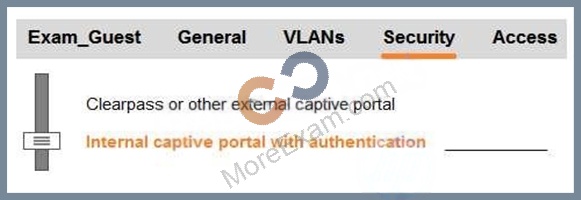
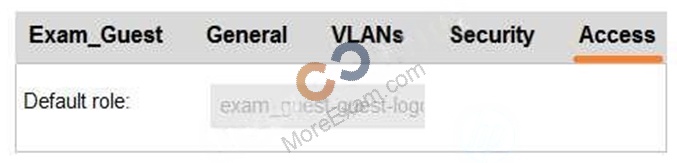
Question36: A company has an Aruba solution with a guest WLAN named exam_guest. A network administrator creates the guest WLAN with the wizard and does not change any of the default roles. The authentication server does not send particular role assignments for authorized users. The company wants to deny guests access to specific IP ranges after the guest authenticate.
For which role should the administrator create the rule to deny this traffic?

Question37: Refer to the exhibit.

What describes the behavior for this WLAN?
Question38: An Aruba solution has a WLAN that uses WPA2-Enterprise security. How are encryption keys dynamically managed for the wireless users?

Question39: What is the difference between WPA and WPA2 encryption?

Question40: Which class of controller is more appropriate in a branch installation with up to 64 APs?

Question41: Which task can an Aruba Air Monitor (AM) perform?
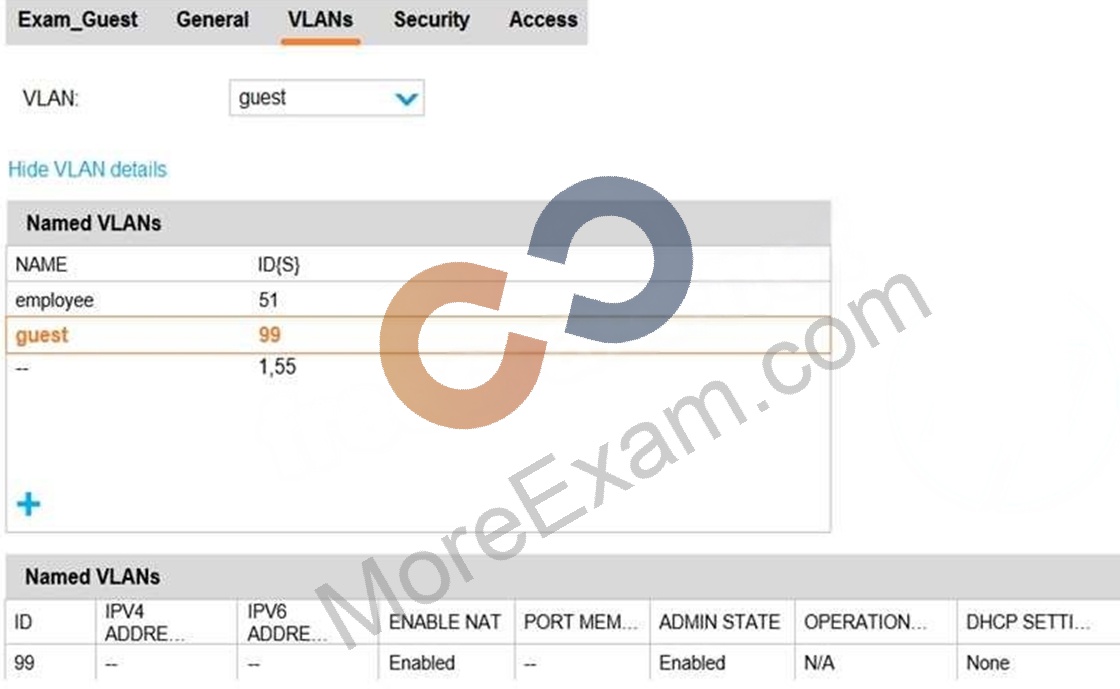
Question42: Refer to the exhibits.
Exhibit 1

Exhibit 2

Exhibit 3

A network administrator creates a guest WLAN on an Aruba Mobility Manager (MM). The exhibits show some of the settings for the WLAN. The administrator does not change the policies for those roles.
How does the firewall control guest clients when they first connect to the WLAN?

Question43: A company has an Aruba solution. The company wants to host a guest login portal with this solution, and the login portal must gie guests the option to create their own login accounts.
How can a network administrator help meet these criteria?

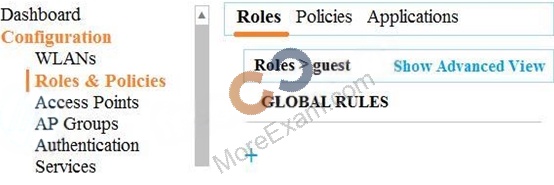
Question44: Refer to the exhibit.

A network administrator adds a global rule in the area shown in the exhibit. Where does the global rule take effect?

Question45: Assume that administrators accept the default forwarding mode for WLANs. How does wireless user traffic flow in a master-local architecture, and how does it flow in a Mobility Master (MM) architecture?

Question46: What does an Aruba Mobility Master (MM) do before it deploys a configuration to a Mobility Controller (MC)?

Question47: Refer to the exhibits.
Exhibit 1

Exhibit 2

A company has an Aruba Mobility Master (MM)-based solution and needs a new WLAN for the corporate campus. A network administrator completes the creation of this WLAN, as shown in Exhibit 1. When the administrator tries to test a connection to the WLAN in various locations, the WLAN sometimes shows up in the list of WLANs on the client but sometimes does not. The administrator can see the WLAN in the list, as shown in Exhibit 2.
What is the error?

Question48: A network administrator examines a list of 2.4GHz clients with low performance in the Mobility Master (MM) dashboard. Which property should pose a concern as a potential performance issue?

Question49: What is one setting that a network administrator can configure for user roles in an Aruba solution?

Question50: What is one reason for a network administrator to visit the Dashboard > Usage window on an Aruba Mobility Master (MM)?

Question51: Refer to the exhibit.

The alias in the rule shown in the exhibit is network 10.1.1.0/24.
A wireless client is assigned IP address 10.1.2.10/24 and the "admins" role. The wireless client at 10.1.2.10 attempts to initiate a Web session with a server at 10.1.1.2. A wired client at 10.1.1.3 attempts to initiate an SSH session with the wireless client at 10.1.2.10.
How does the Aruba firewall handle these attempts?

Question52: Refer to the exhibit.

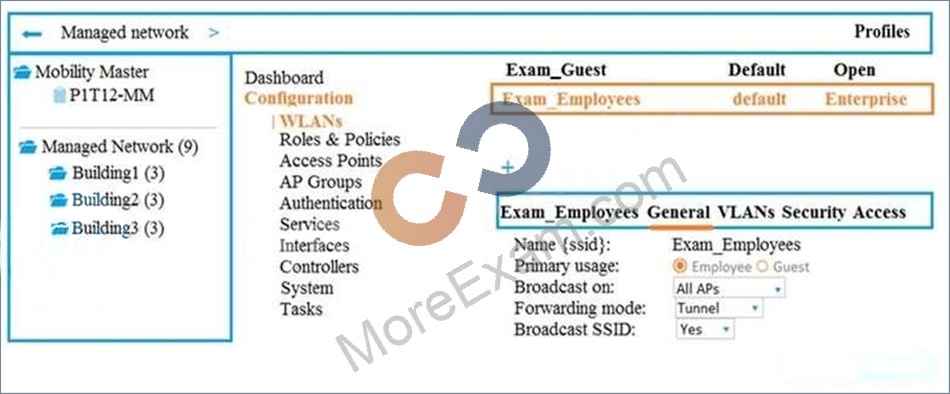
A network administrator sets up the Exam_Employees WLAN on an Aruba solution with a default role of guest, as shown in the exhibit. To which users does the guest role apply?

Question53: An Aruba Mobility Master (MM)-based solution has a WLAN that uses WPA2-Enterprise security. A test login on a wireless client fails.
How can a network administrator determine whether the RADIUS server rejected the credentials or another issue occurred?

Question54: What is one difference between an Aruba firewall access controle rule and an application rule?

Question55: Which Aruba controller supports a maximum of 512 APs?
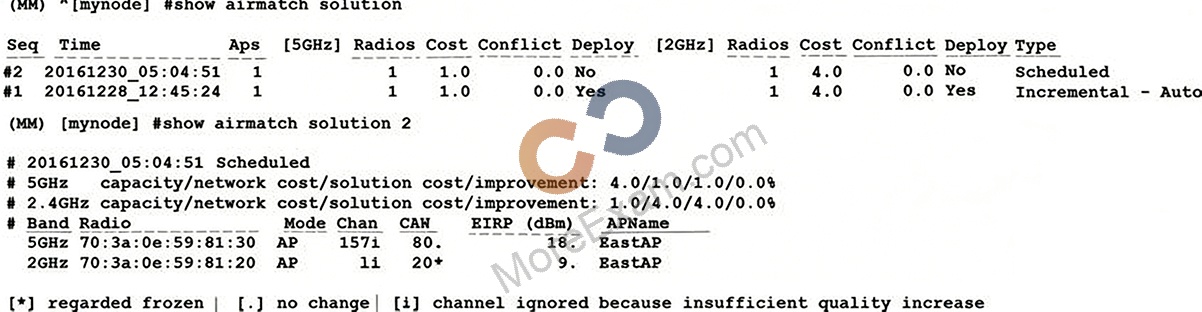
Question56: Refer to the exhibit.

An Aruba solution uses AirMatch with the default AirMatch profile settings. A network administrator sees that a scheduled optimization was completed, but a plan was not deployed.
Based on the exhibit, why did this occur?

Question57: A company has a Mobility Master (MM) solution that manages Mobility Controllers (MCs) in several groups.
The company has several WebCC licenses and wants to reserve these licenses for MCs in the Sunnyvale group only.
How can a network administrator achieve this goal?

Question58: Refer to the exhibit.

Based on the exhibit, what is the maximum number of APs that this Mobility Master (MM) solution can support?

Question59: A company has a single Aruba Mobility Master (MM)-based solution with two Mobility Controllers (MCs).
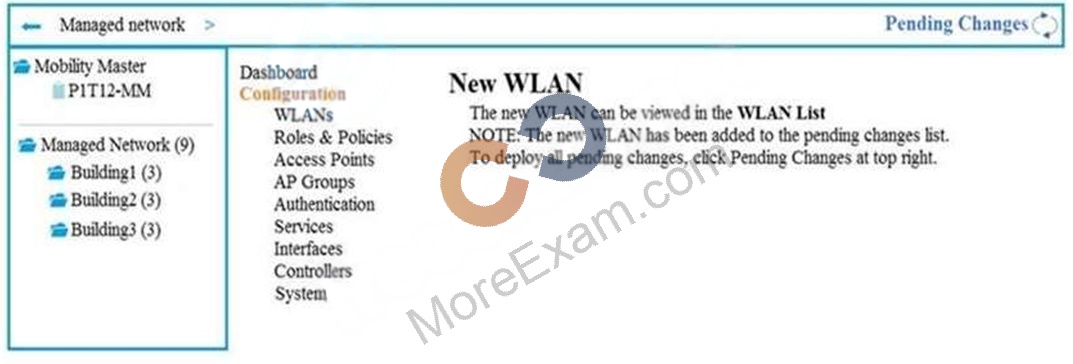
Network administrators want APs in building 1 to support a WLAN but do not want APs in building 2 to support the WLAN.
How can administrator ensure that they can enforce this rule as they set up the WLAN in the Mobility Master (MM) Interface?

Question60: Refer to the exhibits.
Exhibit 1

Exhibit 2

A company has an Aruba Mobility Master (MM)-based solution and needs a new WLAN for the corporate campus. A network administrator completes the creation of this WLAN, as shown in Exhibit 1. When the administrator tries to test a connection to the WLAN in various locations, the WLAN sometimes shows up in the list of WLANs on the client but sometimes does not. The administrator can see the WLAN in the list, as shown in Exhibit 2.
What is the error?

Question61: What is a key difference between an Aruba Air Monitor (AM) and an Aruba Spectrum Analyzer (SA)?

Question62: Refer to the exhibits.
Exhibit 1

Exhibit 2

A company has an Aruba solution. Client 1 is assigned to the users1 role, and Client 2 is assigned to the users2 role. The exhibits show current firewall rules for those roles. The network1 alias used to be 10.1.1.0/24, but the network administrator now changes the network1 alias to 172.16.1.0/24. Client 1 and Client 2 both then send a packet destined to 172.16.1.10.
How does the firewall handle these packets?

Question63: What are two criteria that distinguish different Aruba Mobility Controller (MC) models from each other?

Question64: Refer to the exhibit.

The exhibit shows output from a Mobility Master (MM) dashboard. What does the health status indicate?

Question65: A company plans to deploy a Mobility Master (MM). The MM will manage 50 Mobility Controller (MC) appliances that will control a total of 700 APs, and 10 Virtual Mobility Controllers (VMCs) that will control a total of 200 APs.
How many MM licenses does the company require?

Question66: Refer to the exhibit.

Which role must AP1 play?

Question67: Which settings can a Mobility Master (MM) deploy to Mobility Controllers (MCs) but master controllers CANNOT deploy to local controllers?