MoreExam
1. Question Content...
EXPLANATION
Answer: X - EXPLANATION Content.
Question1: To avoid hard-coding values, a flow uses some property placeholders and thecorresponding values are stored in a configuration file.Where does the configuration file's location need to be specified in the Mule application?
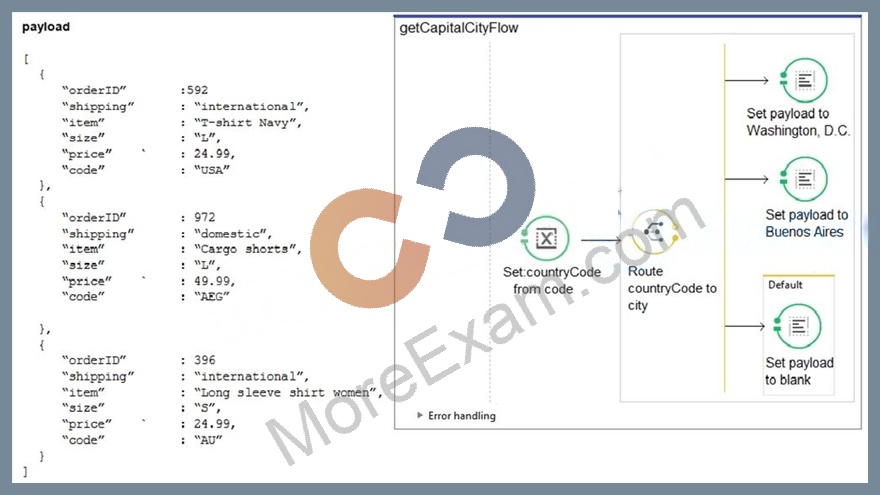
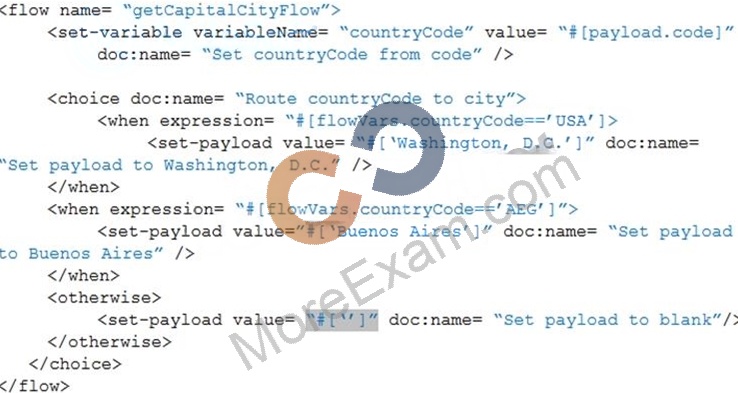
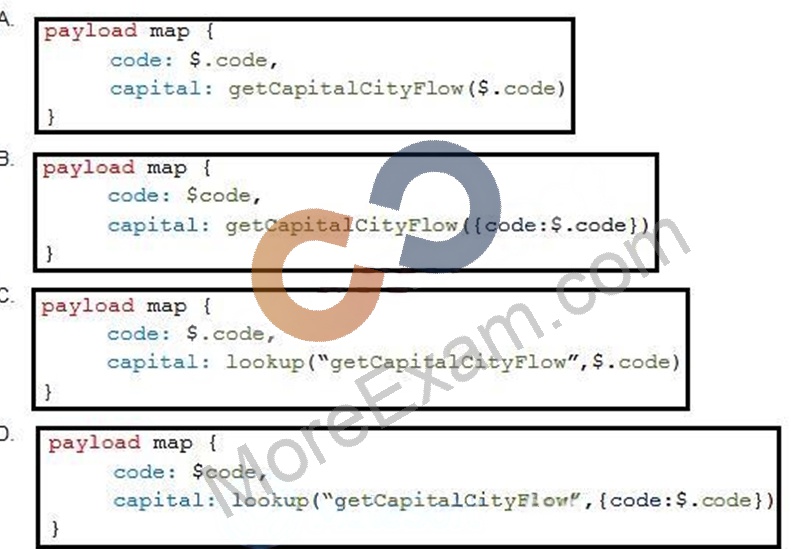
Question2: Refer to the exhibits. What DataWeave transformation calls the flow with the following input payload?
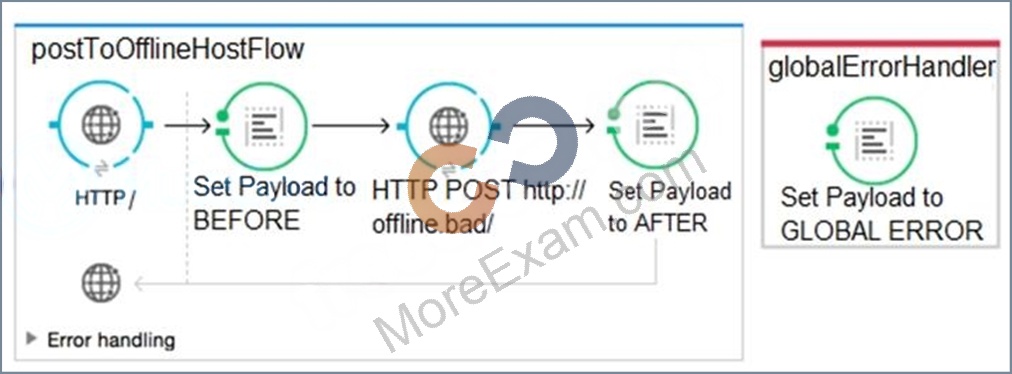
Question3: Refer to the exhibits. A Mule application is configured to use the globalErrorHandler exception handler.When the flow is executed, a request is made to a host that isoffline and a Java exception is thrown with the message "Error sending HTTP request to http://offline.bad:80/".What response is returned to a web client request to postToOfflineHostFlow's HTTP Listener?
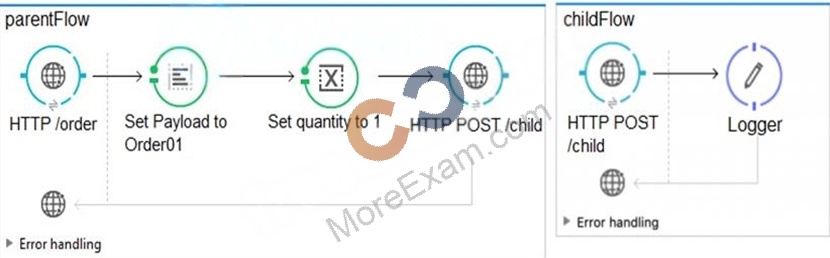
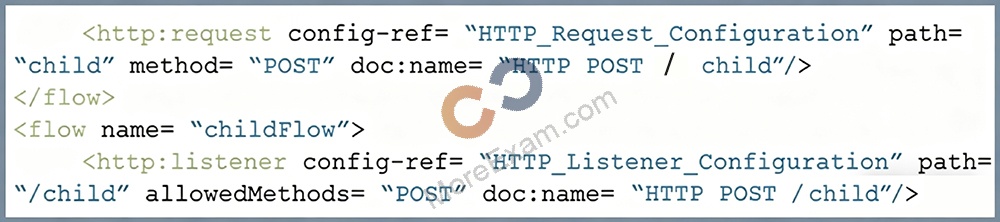
Question4: Refer to the exhibits. The parentFlow contains an HTTP Request. The HTTP Listeners and HTTP Request use default configurations.What valuesare accessible in childFlow after a web client submits a request tohttp://localhost:8081/order?color=red?
Question5: A Mule application is created with an HTTP inbound endpoint defined to receive custName and accountType as query parameters. The accountType is captured using a Set Variable transformer with the same name.What is the correct MEL expression for logging accountType?
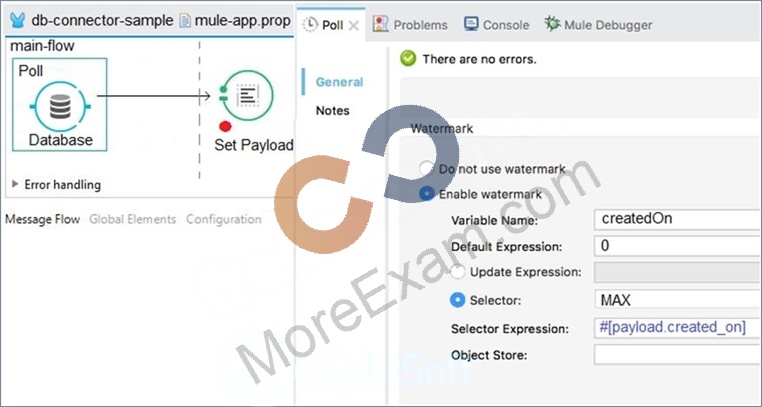
Question6: Refer to the exhibit. How is the watermark referenced inside the Set Payload transformer?
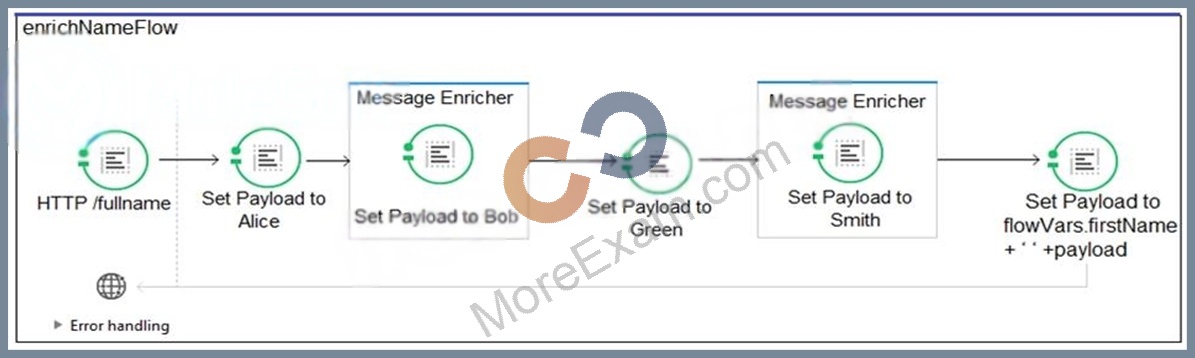
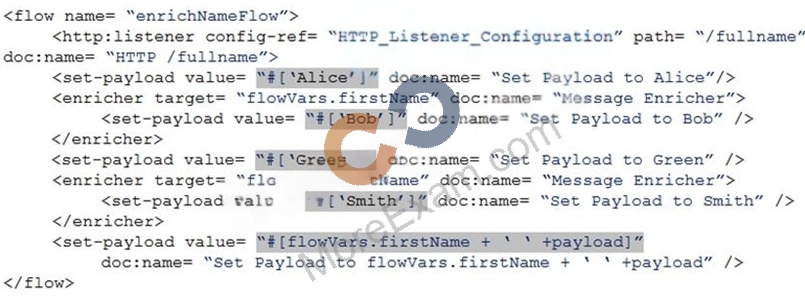
Question7: Refer to the exhibit. What is the payload at the end of the flow?
Question8: Refer tothe exhibit. A Payload Filter component processes a message with a non-empty payload. What happens when the payload does not match the Payload Filter type?
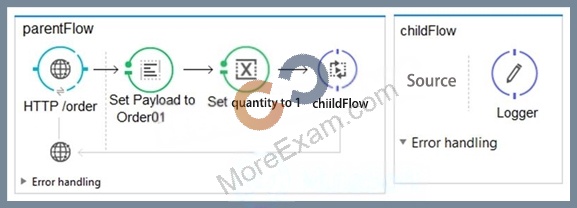
Question9: Refer to the exhibit. The parentFlow contains a Flow Reference for childFlow.What values are accessible in childFlow after a web client submita a request tohttp://localhost:8081/order?color=red?
Question10: What authentication data is required to configure a Throttling - SLA basedpolicy in API Manager?