EMT Practice Test

1. Question Content...


Question List

Question1: What is the responsibility of the audit committee during an internal audit?
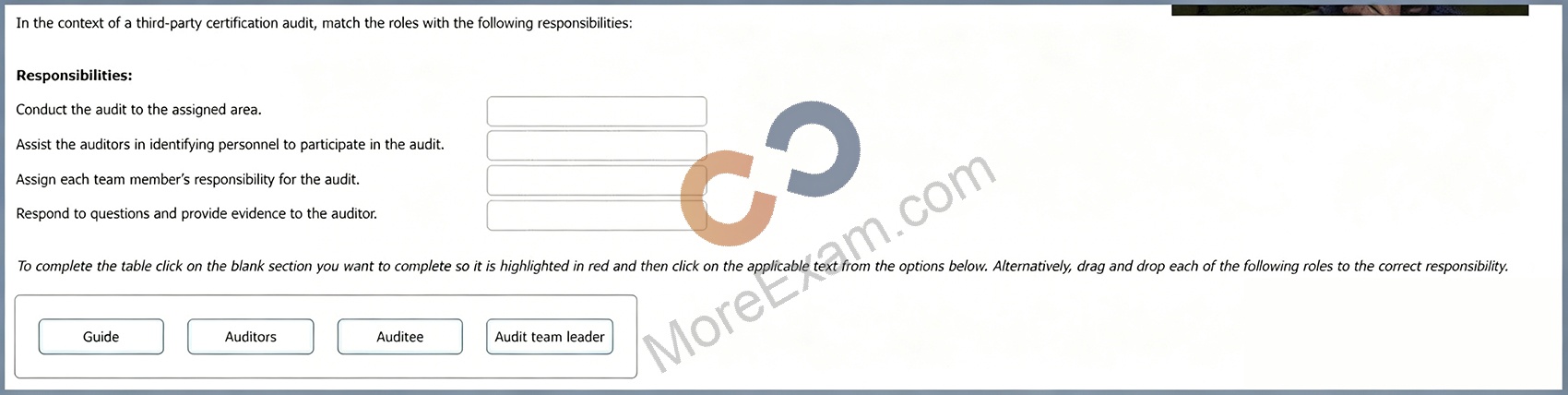
Question2: In the context of a third-party certification audit, match the roles with the following responsibilities:

Question3: Scenario 4:
TD Advertising is a print management company based in Chicago. The company offers design services, digital printing, storage, and distribution. As TD expanded, its management recognized that success depended on adopting new technologies and improving quality.
To ensure customer satisfaction and quality improvement, the company decided to pursue ISO 9001 certification.
After implementing the QMS, TD hired a well-known certification body for an audit. Anne Key was appointed as the audit team leader. She received a document listing the audit team members, audit scope, criteria, duration, and audit engagement limits.
Anne reviewed the document and approved the audit mandate. The certification body and TD's top management signed the certification agreement.
Before contacting TD, Anne reviewed the audit scope and noticed that TD made changes to it due to the adoption of new printing equipment. However, Anne disagreed with the changes, stating they would affect the audit timeline. She considered withdrawing from the audit.
The audit team members were selected based on their knowledge of the legal and other regulations that TD is subject to. Is this acceptable?

Question4: An audit team leader arrives at a printing organisation to carry out a Stage 2 audit for a certification body. At a meeting with the Quality Manager, she is told that they have won their biggest contract from a computer manufacturer to print and compile computer documentation packages. They have leased the unit next door for space reasons but have never worked in this sector before. The Quality Manager wants the ISO 9001 certificate to cover the new contract.
During the audit, a team member finds that a number of print jobs have been rejected by several clients over a number of months due to spelling errors in the print run. The Print Manager blames the new employees they had to take on because of a big contract. The auditor raises a nonconformance against clause 10.2.1.b of ISO
9001.
Which one of the evidence statements would support this finding?

Question5: Scenario 3:
Fin-Pro is a financial institution in Austria offering commercial banking, wealth management, and investment services. The company faced a significant loss of customers due to failing to improve service quality as they expanded.
To regain customer confidence, top management implemented a QMS based on ISO 9001. After a year, they contacted ACB, a local certification body, to pursue ISO 9001 certification.
The audit team was led by Emilia, an experienced lead auditor, and included three auditors. After an agreement was reached, ACB sent the audit objectives to the audit team.
The audit team began by gathering information about Fin-Pro's understanding of ISO 9001 requirements.
While reviewing documented information, they noticed missing records of training and awareness sessions. They conducted employee interviews to verify attendance.
The team also reviewed the organizational chart and job descriptions to confirm employee competence.
They observed the company's working environment (social, psychological, and physical conditions).
The audit team analyzed the evidence and prepared an audit report with findings and conclusions.
Based on the last paragraph of scenario 3, which audit principle did the audit team follow?

Question6: Scenario 6: Davis Clinic (DC) is an American medical center focused on integrated health care. Since its establishment DC was committed to providing qualitative services for its clients, which is the reason why the company decided to implement a quality management system (QMS) based on ISO 9001. After a year of having an active QMS in place, DC applied for a certification audit.
A team of five auditors, from a well-known certification body, was selected to conduct the audit. Eva was appointed as the audit team leader. After three days of auditing, the team gathered to review and examine their findings. They also discussed the audit findings with DC's top management and then drafted the audit conclusions.
In the closing meeting, which was held between the audit team and the top management of DC. Eva presented two nonconformities that were detected during the audit. Eva stated that the company did not retain documented information regarding its outsourced services for an analysis laboratory and regarding the conducted management reviews. During the closing meeting, the audit team required from DCs top management to come up with corrective action plans within two weeks. Although the top management did not agree with the audit findings, the audit team insisted that the auditee must submit corrective actions within the given time frame in order for the audit activities to continue.
Once the action plans were evaluated, the audit team began preparing the audit report. Eva required from the team to provide accurate descriptions of the audit findings and the audit conclusions. The report was then distributed to all the interested parties involved in the audit, including the certification body Based on the report, the certification body together with Eva, as the audit team leader, made the certification decision.
Based on the scenario above, answer the following question:
Why is it important to discuss the audit findings with DC's top management prior to the closing meeting and the submission of the final audit report?

Question7: You work for an organisation, 'A', which provides packaged food to the public. You are asked to lead a team (you as the leader and two other auditors) to audit a supplier, 'B', which provides packaging materials to your organisation. It is 4 p.m. and the audit is close to an end; you are having an internal meeting with the team to decide what will be presented to the auditee during the Closing meeting.
The Closing meeting was scheduled
for 5 p.m.
You, as audit team leader, audited top management, the laboratory, and the storage of raw materials.
Auditor 1 audited the two manufacturing lines and dispatch areas.
You to Auditor 1: "What findings would you report?"
Auditor 1: "When reviewing the Dispatch records, I noticed that during the morning two different trucks (Number 011 and 025) delivered the same batch number of the product (Batch 33555). Truck 011 left the plant at 9.15 am and Truck 025 left the plant at
11.30 am. Procedure P-02 Rev.3 says
that trucks should carry a complete batch. The batch number, once on the truck, is captured using a QR device." You: "OK, what do you think?" Auditor 2: "I think that this is a nonconformity." You: "OK. How would you describe the evidence on which the nonconformity will be based"?
Identify which one of the following statements best describes the identified nonconformity.

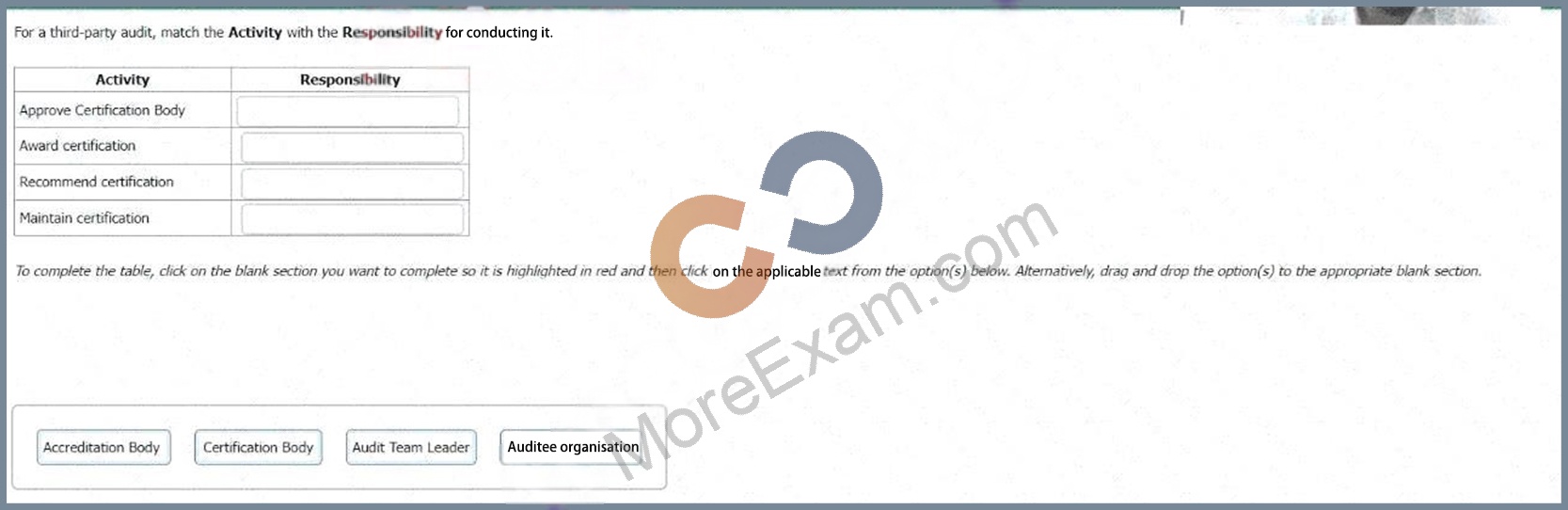
Question8: For a third-party, match the Activity with the Responsibility for conducting it.
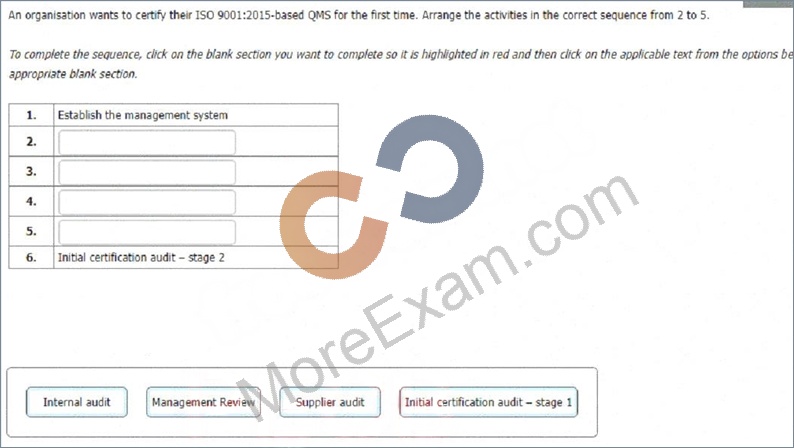
Question9: An organisation wants to certify their ISO 9001:2015-based QMS for the first time. Arrange the activities in the correct sequence from 2 to 5.
To complete the sequence, click on the blank section you want to complete so it is highlighted in red and then click on the applicable text from the options below. Alternatively, drag and drop the options to the appropriate blank section.

Question10: What is a horizontal audit?

Question11: What are the criteria for reviewing documented information?

Question12: Scenario 5: Mechanical-Electro (ME) Audit Stages
Mechanical-Electro, better known as ME, is an American company that provides mechanical and electrical services in China. Their services range from air-conditioning systems, ventilation systems, plumbing, to installation of electrical equipment in automobile plants, electronic manufacturing facilities, and food processing plants.
Due to the fierce competition from local Chinese companies and failing to meet customer requirements, ME's revenue dropped significantly. In addition, customers' trust and confidence in the company decreased, and the reputation of the company was damaged.
In light of these developments, the top management of ME decided to implement a quality management system (QMS) based on ISO 9001. After having an effective QMS in place for over a year, they applied for a certification audit.
A team of four auditors was appointed for the audit, including Li Na as the audit team leader. Initially, the audit team conducted a general review of ME's documents, including the quality policy, operational procedures, inventory lists, QMS scope, process documentation, training records, and previous audit reports.
Li Na stated that this would allow the team to maintain a systematic and structured approach to gathering documents for all audit stages. While reviewing the documented information, the team observed some minor issues but did not identify any major nonconformities. Therefore, Li Na claimed that it was not necessary to prepare a report or conduct a meeting with ME's representatives at that stage of the audit. She stated that all areas of concern would be discussed in the next phase of the audit.
Following the on-site activities and the opening meeting with ME's top management, the audit team structured an audit test plan to verify whether ME's QMS conformed to Clause 8.2.1 (Customer Communication) of ISO 9001.
To do so, they gathered information through group interviews and sampling. Li Na conducted interviews with departmental managers in the first group and then with top management. In addition, she chose a sampling method that sufficiently represented customer complaints from both areas of ME' s operations.
The team members were responsible for the sampling procedure. They selected a sample size of 4 out of
45 customer complaints received weekly for electrical services and 2 out of 10 complaints for mechanical services.
Afterward, the audit team evaluated the evidence against the audit criteria and generated the audit findings.
After reviewing the documented information, Li Na claimed that it was not necessary to report the minor nonconformities that were identified; instead, they would be discussed in the next audit phase. Is this acceptable?

Question13: An organization has decided to implement a QMS based on ISO 9001. What should they consider when determining internal issues?

Question14: Scenario 3:
Fin-Pro is a financial institution in Austria offering commercial banking, wealth management, and investment services. The company faced a significant loss of customers due to failing to improve service quality as they expanded.
To regain customer confidence, top management implemented a QMS based on ISO 9001. After a year, they contacted ACB, a local certification body, to pursue ISO 9001 certification.
The audit team was led by Emilia, an experienced lead auditor, and included three auditors. After an agreement was reached, ACB sent the audit objectives to the audit team.
The audit team began by gathering information about Fin-Pro's understanding of ISO 9001 requirements.
While reviewing documented information, they noticed missing records of training and awareness sessions. They conducted employee interviews to verify attendance.
The team also reviewed the organizational chart and job descriptions to confirm employee competence.
They observed the company's working environment (social, psychological, and physical conditions).
The audit team analyzed the evidence and prepared an audit report with findings and conclusions.
What type of evidence has been collected by the ACB's audit team, as presented in scenario 3?

Question15: "A set of interrelated or interlacing elements of an organization to establish policies and objectives, and processes to achieve those objectives" is the definition of a/an:

Question16: Which statement regarding the drafting of the audit conclusions is correct?
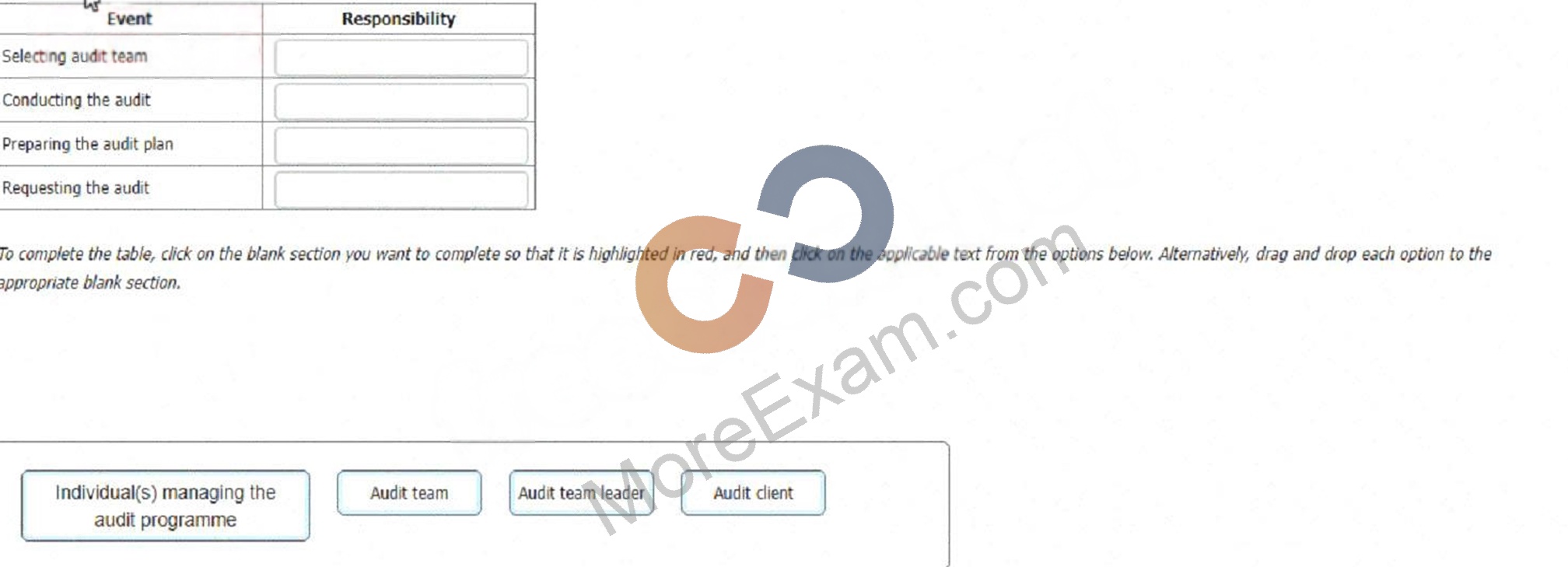
Question17: In the context of a third-party audit, match the event with the responsibility for conducting it.

Question18: Which one of the following documents addresses audit time calculation for third-party certification audits?

Question19: Select the phrase that best describes the purpose of a quality management system to ISO 9001 in relation to the performance of an organization.

Question20: Select the term that best describes the purpose of retaining documented information in a quality management system to ISO 9001.

Question21: Scenario 4:
TD Advertising is a print management company based in Chicago. The company offers design services, digital printing, storage, and distribution. As TD expanded, its management recognized that success depended on adopting new technologies and improving quality.
To ensure customer satisfaction and quality improvement, the company decided to pursue ISO 9001 certification.
After implementing the QMS, TD hired a well-known certification body for an audit. Anne Key was appointed as the audit team leader. She received a document listing the audit team members, audit scope, criteria, duration, and audit engagement limits.
Anne reviewed the document and approved the audit mandate. The certification body and TD's top management signed the certification agreement.
Before contacting TD, Anne reviewed the audit scope and noticed that TD made changes to it due to the adoption of new printing equipment. However, Anne disagreed with the changes, stating they would affect the audit timeline. She considered withdrawing from the audit.
In scenario 4, the audit team determined the audit feasibility by considering only the resources available for the audit. Is this acceptable?

Question22: In the context of a third-party certification audit, how can the auditor demonstrate confidentiality? Select two.

Question23: Which of the options below is an example of minor nonconformity?

Question24: TIX provides services to the informatic equipment of large organisations. They operate an ISO 9001:2015 QMS that is being audited by an important customer (second-party audit). During the audit, the audit team has identified two nonconformities. When preparing the Closing meeting, the audit team discussed and agreed both nonconformities with TIX's quality manager. The Closing meeting was planned for 6pm with the general manager, quality manager and service manager at the meeting room.
At 6pm, when the audit team enters the meeting room, only two people are present and waiting for them: the Health and Safety supervisor and the warehouse supervisor. Neither have participated in the audit.
The dialogue among them is as follows:
Audit team leader: "Good evening, could you please inform the three managers that we are ready to start with the Closing meeting?" Health and Safety supervisor: "Good evening. We are sorry to inform you that the general manager was involved in a serious car accident, and the other two managers have had to leave urgently to attend the emergency." Warehouse supervisor: "They have asked us to listen to what you need to say and to sign whatever we need to sign. We also have a message from them about the two nonconformities. They wanted us to ask you if you could contact them in a couple of days to determine how to proceed." Which one of the following options would be your preferred response to the final comment made by the warehouse manager?

Question25: How much time is usually spent on the Stage 1 audit?
Question26: Scenario 4:
TD Advertising is a print management company based in Chicago. The company offers design services, digital printing, storage, and distribution. As TD expanded, its management recognized that success depended on adopting new technologies and improving quality.
To ensure customer satisfaction and quality improvement, the company decided to pursue ISO 9001 certification.
After implementing the QMS, TD hired a well-known certification body for an audit. Anne Key was appointed as the audit team leader. She received a document listing the audit team members, audit scope, criteria, duration, and audit engagement limits.
Anne reviewed the document and approved the audit mandate. The certification body and TD's top management signed the certification agreement.
Before contacting TD, Anne reviewed the audit scope and noticed that TD made changes to it due to the adoption of new printing equipment. However, Anne disagreed with the changes, stating they would affect the audit timeline. She considered withdrawing from the audit.
Scenario 4 mentions that Anne received a document that contained the audit scope, criteria, duration, and the limits to the audit engagement. What did Anne receive in this case?

Question27: Scenario 7: POLKA is a car manufacturing company based in Stockholm, Sweden. The company has around 14,000 employees working in different sectors which help with the design, painting, assembling, and test drives of the final product. The company is widely known for its qualitative products and affordable prices. In order to retain their reputation, POLKA implemented a quality management system (QMS) based on ISO 9001.
Before applying for certification, the company decided to conduct an internal audit to check whether there are any nonconformities in their QMS and if the requirements of ISO 9001 are being fulfilled.
The top management appointed Sean, the internal auditor, as the team leader of the internal audit team. Sean required from the top management to have unrestricted access to the employees and executives of POLKA and to the documented information. Furthermore, Sean required to establish a team with a large number of auditors, considering the size and the complexity of the organization. The top management of POLKA agreed with Sean's requirements.
The top management, in cooperation with Sean, assigned 10 more employees to the audit team.
Following that. Sean planned the audit activities and assigned the roles and responsibilities to each auditor. They began by interviewing employees of different manufacturing departments to check whether they are aware of the process of the QMS implementation. While conducting these activities, one of the auditors asked Sean for permission to audit the department in which he worked on a daily basis, as he was very familiar with the processes of the department.
Along the way, the teams findings showed that the staff were trained, documented information was updated, and the QMS fulfilled the requirements of ISO 9001. The internal audit took three weeks to complete, and on the last week the audit team held a final meeting The team shared their results and together drafted the audit report This report was submitted to the top management of the company. The report was maintained as documented information, and was available to the relevant interested parties.
Based on the scenario above, answer the following question:
According to Scenario 7, one of the auditors requested permission from Sean to audit the department in which he worked on a daily basis. Should Sean grant the auditor permission?

Question28: Scenario 1: AL-TAX is a company located in California which provides financial and accounting services. The company manages the finances of 17 companies and now is seeking to expand their business even more The CEO of AL-TAX, Liam Durham, claims that the company seeks to provide top- notch services to their clients Recently, there were a number of new companies interested in the services provided by AL-TAX.
In order to fulfill the requirements of new clients and further improve quality, Liam discussed with other top management members the idea of implementing a quality management system (QMS) based on ISO 9001. During the discussion, one of the members of the top management claimed that the size of the company was not large enough to implement a QMS. In addition, another member claimed that a QMS is not applicable for the industry in which AL TAX operates. However, as the majority of the members voted for implementing the QMS. Liam initiated the project.
Initially, Liam hired an experienced consultant to help AL-TAX with the implementation of the QMS.
They started by planning and developing processes and methods for the establishment of a QMS based on ISO 9001. Furthermore, they ensured that the quality policy is appropriate to the purpose and context of AL TAX and communicated to all employees. In addition, they also tried to follow a process that enables the company to ensure that its processes are adequately resourced and managed, and that improvement opportunities are determined.
During the implementation process, Liam and the consultant focused on determining the factors that could hinder their processes from achieving the planned results and implemented some preventive actions in order to avoid potential nonconformities Six months after the implementation of the QMS.
AL-TAX conducted an internal audit. The results of the internal audit revealed that the QMS was not fulfilling all requirements of ISO 9001. A serious issue was that the QMS was not fulfilling the requirements of clause 5.1.2 Customer focus and had also not ensured clear and open communication channels with suppliers.
Throughout the next three years, the company worked on improving its QMS through the PDCA cycle in the respective areas. To assess the effectiveness of the intended actions while causing minimal disruptions, they tested changes that need to be made on a smaller scale. After taking necessary actions, AL-TAX decided to apply for certification against ISO 9001.
Based on the scenario above, answer the following question:
Scenario 1 indicates that AL-TAX did not ensure clear and open communication channels with interested parties. Which quality management principle did the organization not follow in this case?

Question29: What is a list of actions that should be performed during the audit with their respective timeline?

Question30: Scenario 3:
Fin-Pro is a financial institution in Austria offering commercial banking, wealth management, and investment services. The company faced a significant loss of customers due to failing to improve service quality as they expanded.
To regain customer confidence, top management implemented a QMS based on ISO 9001. After a year, they contacted ACB, a local certification body, to pursue ISO 9001 certification.
The audit team was led by Emilia, an experienced lead auditor, and included three auditors. After an agreement was reached, ACB sent the audit objectives to the audit team.
The audit team began by gathering information about Fin-Pro's understanding of ISO 9001 requirements.
While reviewing documented information, they noticed missing records of training and awareness sessions. They conducted employee interviews to verify attendance.
The team also reviewed the organizational chart and job descriptions to confirm employee competence.
They observed the company's working environment (social, psychological, and physical conditions).
The audit team analyzed the evidence and prepared an audit report with findings and conclusions.
ACB sent the audit objectives to the audit team after an agreement was reached. Is this acceptable?

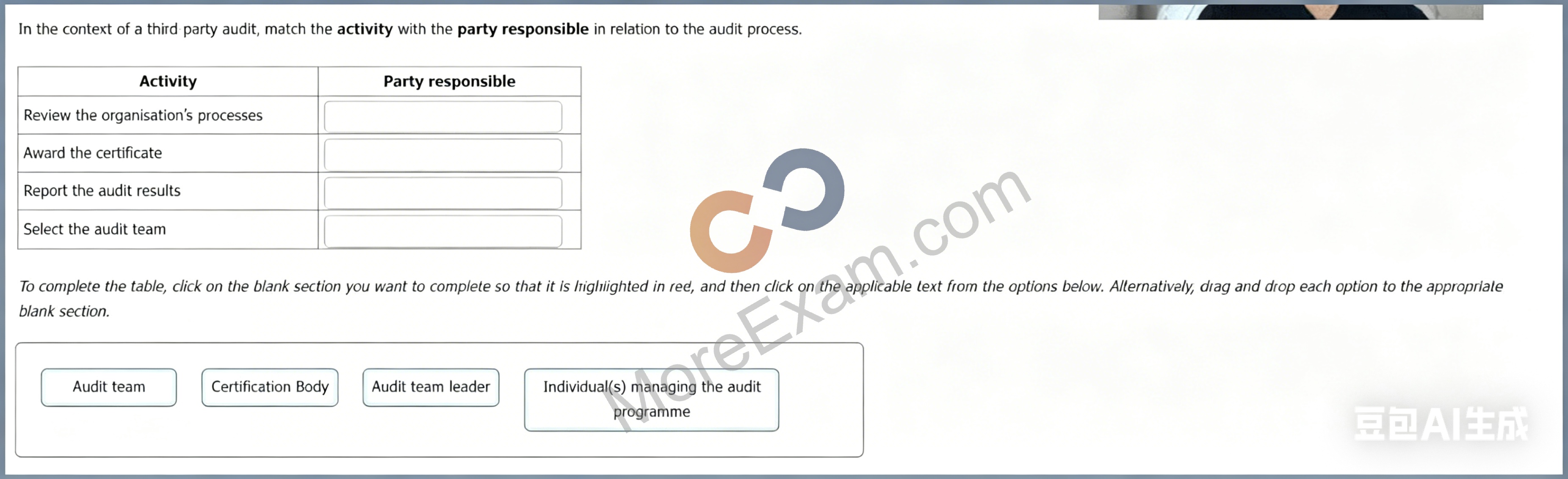
Question31: In the context of a third-party audit, match the activity with the party responsible in relation to the audit process.

Question32: During a second-party audit of a dairy farm (by a potential customer) complying with ISO 9001:2015, the auditor verifies that there is large variability in the daily production of the milking yard. The current agreement with their only customer is to provide 2,000 litres per day. However, in the last two years, they have noticed an increasing variability in daily production.
If they produce less than 2,000 litres, they are penalised with a fine of 1.5 pesos for every litre that they do not provide. If they produce more than 2,000 litres, they use the extra milk to feed the pigs.
This process has been in operation for decades. The dairy farm was founded by the grandfather of the current owners, who did not want to alter the established practices.
The auditor raises a nonconformity on the basis that the process is not under control (Clause 8.1).
If you had been the auditor, which one of the following actions would you have accepted?

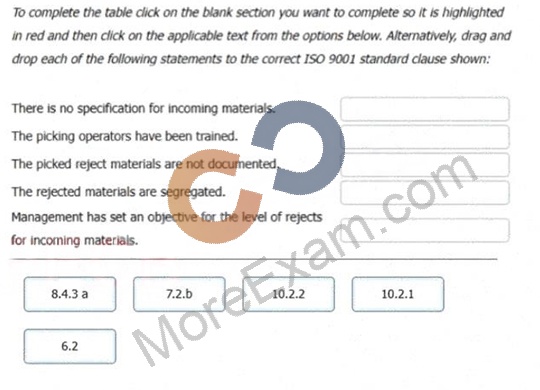
Question33: You are conducting an ISO 9001 audit of a Materials Recycling Facility (MRF). The company processes waste plastics into raw material for plastic bottle manufacturers. You reach the manual picking line where operators are removing contaminant materials from incoming products, such as plastic bags, plastic film and badly contaminated items that would compromise the recycling process.
You interview the line supervisor.
You: "Why are these plastic items being rejected at this stage?"
Auditee: "They do not meet our processing standards."
You: "What is the reason for that?"
Auditee: "These items are likely to damage the machinery down the line. They can also compromise our quality standards. We need to protect our reputation for good quality output materials." You: "What happens to the rejected items?" Auditee: "Some get melted down in another process later on and some are disposed of as waste products that cannot be recycled." You: "What happens to the waste products?" Auditee: "I'm not sure. I suppose they go to landfill." After further auditing, you have gathered additional evidence.

Question34: You, as auditor, are in dialogue with the quality lead and managing director of a small business that supplies specialist laboratory equipment and furniture.
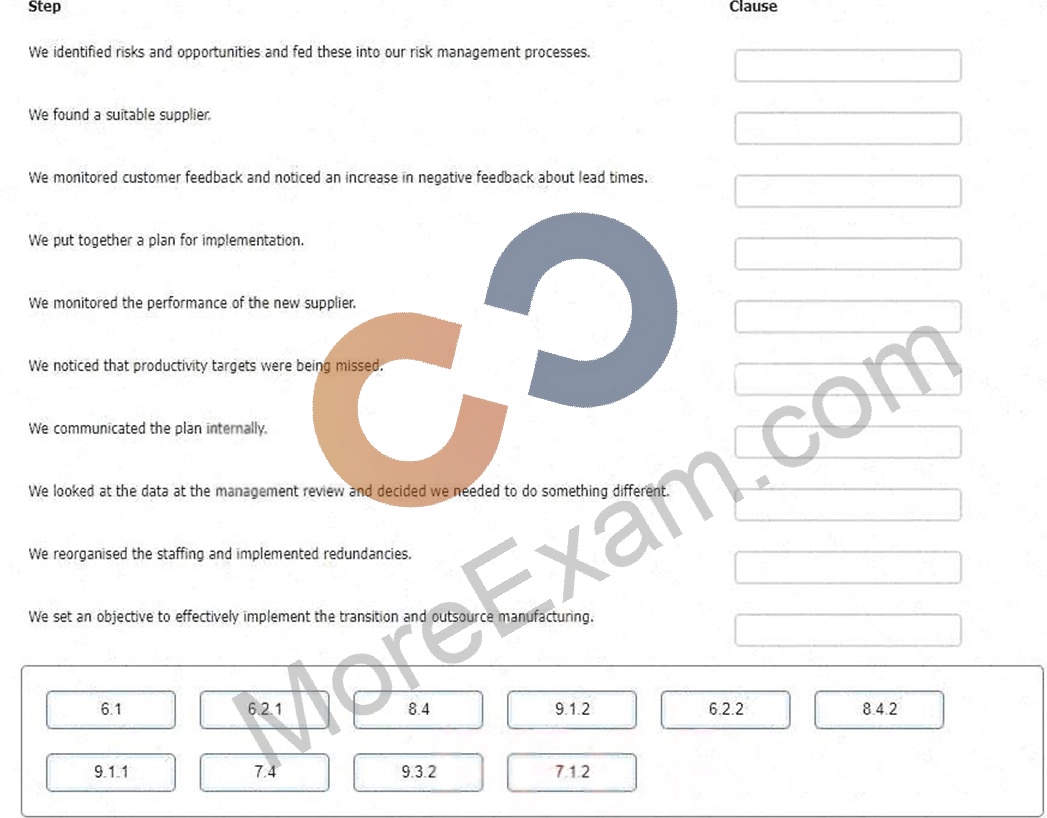
You: "I'd like to look at how you manage change in the organisation. What changes have you made as a business, say, over the last 12 months?" Auditee: "We have made some strategic changes, the main one being that we no longer manufacture our own products in house." You: "That sounds like quite a significant change. What has been the impact of that?" Auditee: "We now mainly sell other manufacturers' products, under their brand names, and have outsourced manufacture of our own brand products to one of our suppliers. Unfortunately, we had to make six members of our staff redundant. This represents about 20% of our workforce, so this has been quite a challenging time." You: "I'm sure. What were the reasons for making the change?" Auditee: "Our manufacturing section was a small operation, and we struggled to cope with fluctuations in demand. During busy periods, we found it hard to meet lead times, and in quiet periods we had staff with little to do. This was having an impact on customer satisfaction and meant we had to charge premium prices that made our product uncompetitive." You: "How did you go about the change?" In relation to the auditor's question about how the change was managed, the auditee mentions the steps listed below. Match the ISO 9001 clauses to the steps.
To complete the table, click on the blank section you want to complete so it is highlighted in red and then click on the ISO 9001 clauses listed below. Alternatively, drag and drop each clause to show which step the requirement applies to.

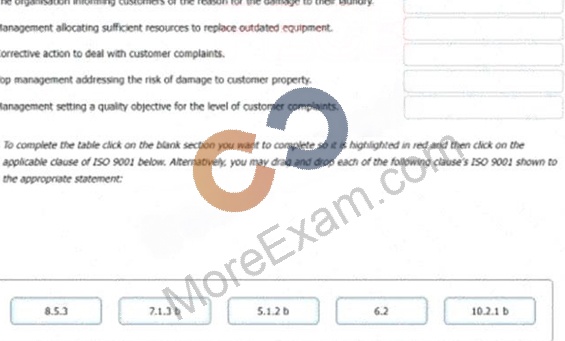
Question35: Whistiekleen is a national dry cleaning and laundry organisation with 50 shops. You are conducting a surveillance audit of the Head Office and are sampling customer complaints. You find that 80% of complaints originate from five shops in the same region. Most of these complaints relate to damage to customer laundry.
The Quality Manager tells you that these are the oldest shops in the organisation. The deaning equipment needs replacing but the organisation cannot afford it now. You learn that the shop managers were told to dismiss most of the claims based on the poor quality of the laundered materials.
On raising the matter with senior management, you are told that there are plans to replace the equipment in these shops over the next five years.
Match the ISO 9001 Clauses to the statements.

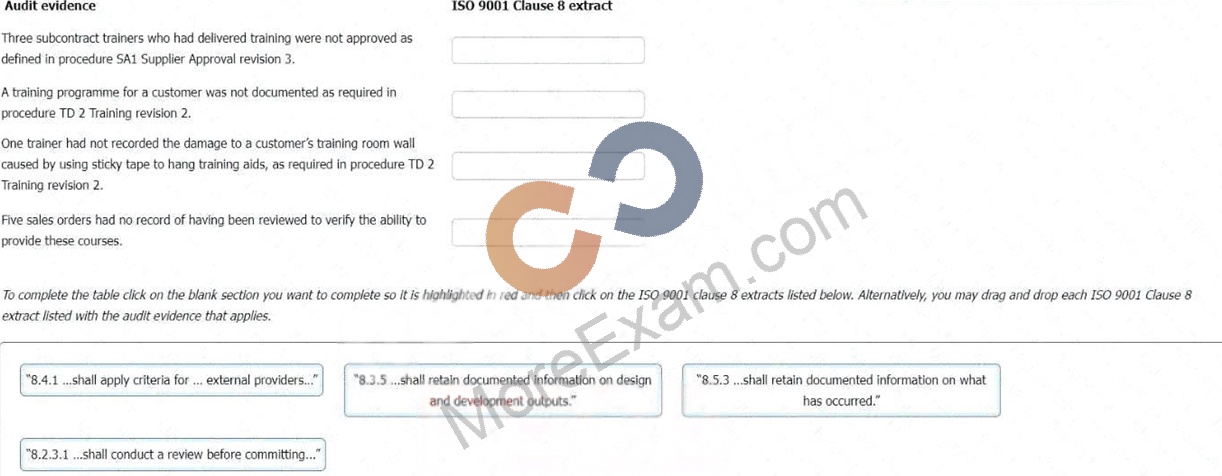
Question36: You are conducting an audit at an organisation seeking certification to ISO 9001 for the first time. The organisation offers health and safety training to customers. Training courses are offered either as open courses, delivered at a public venue, or online, or as courses that are tailored to meet specific requirements.
The business operates from a single office and those who deliver the training are either full-time employees or subcontractors.
You have gathered audit evidence as outlined below. Match the ISO 9001 Clause 8 extract to the audit evidence.

Question37: Scenario 6: Davis Clinic (DC) is an American medical center focused on integrated health care. Since its establishment DC was committed to providing qualitative services for its clients, which is the reason why the company decided to implement a quality management system (QMS) based on ISO 9001. After a year of having an active QMS in place, DC applied for a certification audit.
A team of five auditors, from a well-known certification body, was selected to conduct the audit. Eva was appointed as the audit team leader. After three days of auditing, the team gathered to review and examine their findings. They also discussed the audit findings with DC's top management and then drafted the audit conclusions.
In the closing meeting, which was held between the audit team and the top management of DC. Eva presented two nonconformities that were detected during the audit. Eva stated that the company did not retain documented information regarding its outsourced services for an analysis laboratory and regarding the conducted management reviews. During the closing meeting, the audit team required from DCs top management to come up with corrective action plans within two weeks. Although the top management did not agree with the audit findings, the audit team insisted that the auditee must submit corrective actions within the given time frame in order for the audit activities to continue.
Once the action plans were evaluated, the audit team began preparing the audit report. Eva required from the team to provide accurate descriptions of the audit findings and the audit conclusions. The report was then distributed to all the interested parties involved in the audit, including the certification body Based on the report, the certification body together with Eva, as the audit team leader, made the certification decision.
Based on the scenario above, answer the following question:
According to Scenario 6, the audit team required DC's top management to submit corrective action plans within two weeks. Is this action acceptable?

Question38: An audit team of three people is conducting a Stage 2 audit to ISO 9001 of an engineering organisation that manufactures sacrificial anodes for the oll and gas industry in marine environments. These are aluminium products designed to prevent corrosion of submerged steel structures. You, as one of the auditors, find that the organisation has shipped anodes for Project DK in the Gulf of Mexico before the galvanic efficiency test results for the anodes have been fully analysed and reported as required by the customer. The Quality Manager explains that the Managing Director authorised release of the anodes to avoid late delivery as penalties would be imposed. The customer was not informed since the tests very rarely fall below the required efficiency. You raise a nonconformity against clause 8.6 of ISO 9001.
Which of the following options for the best description of the nonconformity?

Question39: You are carrying out an annual audit at an organisation that offers home security services. You are interviewing the Quality Manager (QM) You: "Would you tell me about your management review process?" QM: "The senior management team plans to review the management system every six months. The review follows a set agenda and records are maintained." You: "May I see the records from the last two management reviews?" Narrative: The Quality Manager gives you the latest record, which shows the last management review took place nine months ago.
The Quality Manager then gives you the previous management review record, which took place one year before the latest review.
You: "Are there any other review reports in the last two years?
QM: "No, these are the only ones."

Question40: Which action indicates that an organization is meeting the requirements of ISO 9001 regarding nonconforming outputs?

Question41: Select the word that best completes the sentence:

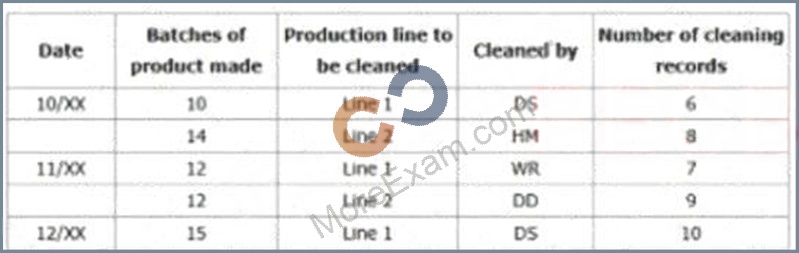
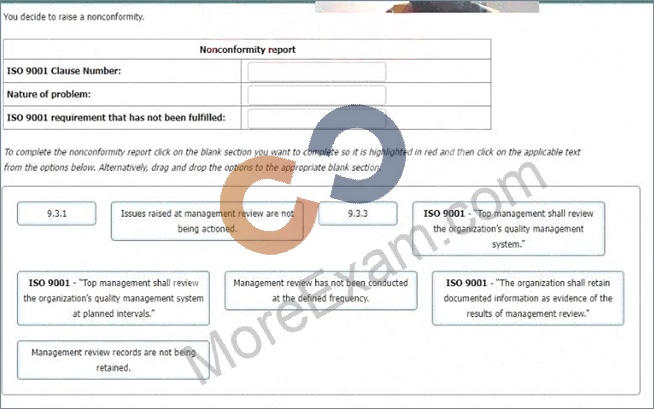
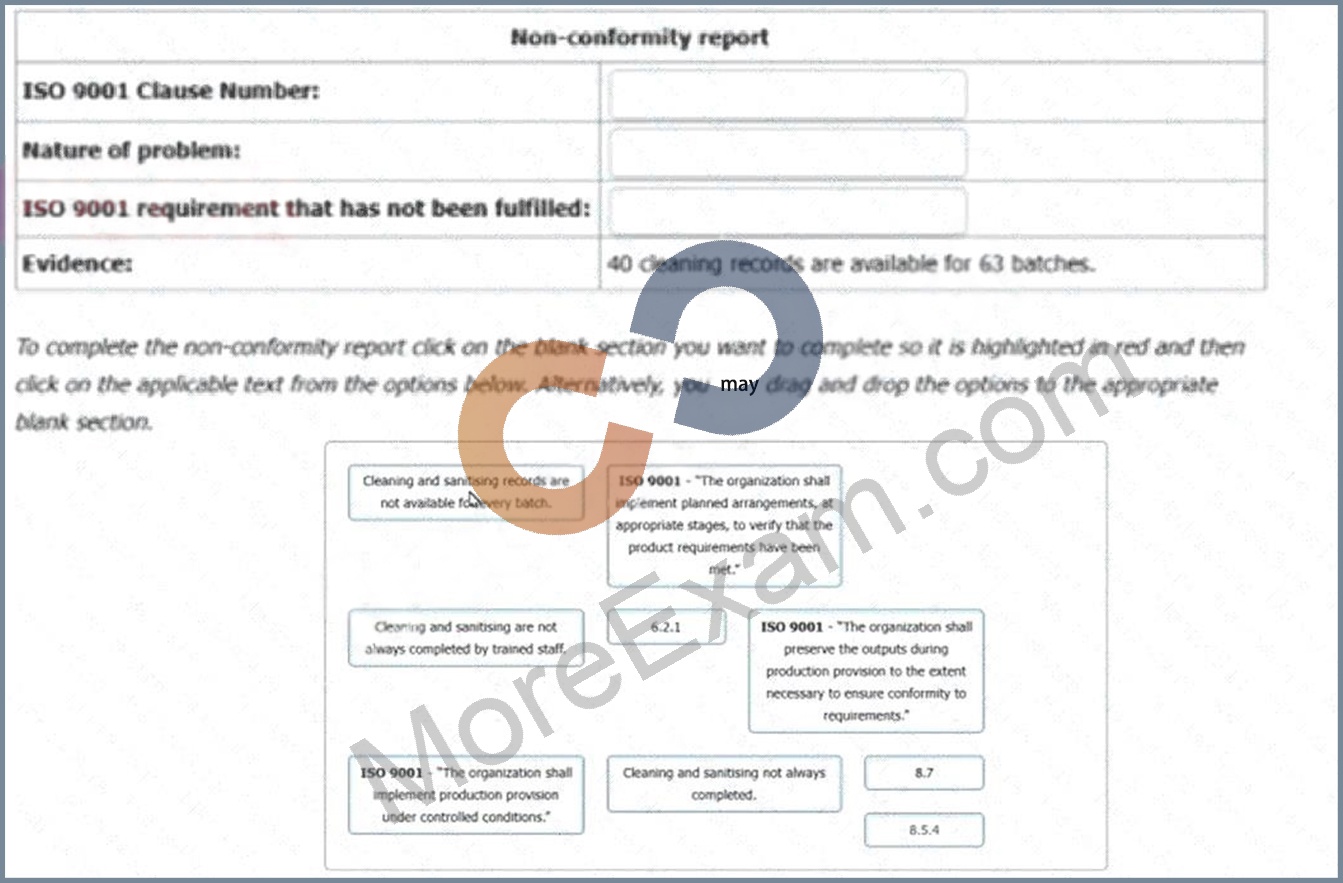
Question42: You are carrying out an audit at a single-site organisation seeking certification to ISO 9001 for the first time.
The organisation manufactures cosmetics for major retailers.
You are interviewing the Manufacturing Manager (MM).
You: "I would like to begin by looking at the cleaning controls."
MM: "We record the cleaning of the equipment at the end of every batch. This document details the minimum cleaning frequency and the procedures to follow for all areas and each item of equipment. The person who carries out the cleaning puts their initial on the document and records the time and date alongside." Narrative: You sample production records over 3-days and note down evidence of nonconformity as per the table below.

You decide to raise a non-conformity.

Question43: Who assigns a guide to assist the audit team?

Question44: Which type of audit risk is the risk that a significant defect may occur in the QMS, although the organization has internal control mechanisms in place?

Question45: Scenario 7: POLKA is a car manufacturing company based in Stockholm, Sweden. The company has around 14,000 employees working in different sectors which help with the design, painting, assembling, and test drives of the final product. The company is widely known for its qualitative products and affordable prices. In order to retain their reputation, POLKA implemented a quality management system (QMS) based on ISO 9001.
Before applying for certification, the company decided to conduct an internal audit to check whether there are any nonconformities in their QMS and if the requirements of ISO 9001 are being fulfilled.
The top management appointed Sean, the internal auditor, as the team leader of the internal audit team. Sean required from the top management to have unrestricted access to the employees and executives of POLKA and to the documented information. Furthermore, Sean required to establish a team with a large number of auditors, considering the size and the complexity of the organization. The top management of POLKA agreed with Sean's requirements.
The top management, in cooperation with Sean, assigned 10 more employees to the audit team.
Following that. Sean planned the audit activities and assigned the roles and responsibilities to each auditor. They began by interviewing employees of different manufacturing departments to check whether they are aware of the process of the QMS implementation. While conducting these activities, one of the auditors asked Sean for permission to audit the department in which he worked on a daily basis, as he was very familiar with the processes of the department.
Along the way, the teams findings showed that the staff were trained, documented information was updated, and the QMS fulfilled the requirements of ISO 9001. The internal audit took three weeks to complete, and on the last week the audit team held a final meeting The team shared their results and together drafted the audit report This report was submitted to the top management of the company. The report was maintained as documented information, and was available to the relevant interested parties.
Based on the scenario above, answer the following question:
Sean requested unrestricted access to the employees, executives, and documented information of POLKA. Is this in accordance with audit best practices?

Question46: You are carrying out an audit at an organisation seeking certification to ISO 9001 for the first time. The organisation offers health and safety training to customers.
You are interviewing the Quality Systems Manager (QSM).
You: "What risks and opportunities have the business identified?"
QSM: "I'1l show you. This was discussed with the Managing Director at the latest management review." Narrative: The QSM shows you the latest management review record and points to the following table:

You: "How is the business planning to address these risks and opportunities?" QSM: "The MD said that they already knew about them so it was not necessary."

Question47: Which quality management principle does an organization fulfill when it assesses risks, consequences, and impacts before taking action?

Question48: You, as auditor, are in dialogue with the quality lead and managing director of a small business that supplies specialist laboratory equipment and furniture.
You: "I'd like to look at how you manage change in the organisation. What changes have you made as a business, say, over the last 12 months?" Auditee: "We have made some strategic changes, the main one being that we no longer manufacture our own products in house." You: "That sounds like quite a significant change. What has been the impact of that?" Auditee: "We now mainly sell other manufacturers' products, under their brand names, and have outsourced manufacture of our own brand products to one of our suppliers. Unfortunately, we had to make six members of our staff redundant. This represents about 20% of our workforce, so this has been quite a challenging time." You: "I'm sure. What were the reasons for making the change?" Auditee: "Our manufacturing section was a small operation, and we struggled to cope with fluctuations in demand. During busy periods, we found it hard to meet lead times, and in quiet periods we had staff with little to do. This was having an impact on customer satisfaction and meant we had to charge premium prices that made our product uncompetitive." You: "How did you go about the change?" The auditor asks to speak to the purchasing manager about the selection of the subcontractor to manufacture the company's own brand products.
You: "How did you choose a supplier to manufacture your products?"
Auditee: "We have had a long-term relationship with a supplier ABC Ltd - we gave them our design drawings, got them to complete a supplier questionnaire and run a couple of trial batches for us. We were happy with the result and we have used them ever since." ISO 9001:2015, clause 8.4.1 outlines situations when controls need to be applied to externally provided processes, products and services. Which one of the following situations is applicable to this scenario?

Question49: At the end of a second-party audit, the audit team enters the meeting room to hold the closing meeting; only two people are present and waiting for them: the Health and Safety supervisor and the administrative officer. Neither has participated in the audit. However, the team had previously agreed with the auditee Quality Manager on two nonconformities identified during the audit (NC1 and NC2).
They said:
Health and Safety supervisor: "Good evening. We are sorry to inform you that the general manager was involved in a serious car accident, and the other two managers have had to leave urgently to attend to the emergency." Administration officer: "Our quality manager, before leaving, left a written message about 'NC2'. He declares that the correction and corrective action have been already implemented and has attached some documents to the message as evidence of these actions. Therefore, he expects that 'NC2' will not be included in the report." Which one of the following would be your preferred answer to the Quallty Manager's request?

Question50: You will lead a third-party audit next Monday on ABC, an organisation that provides services for cleaning windows from the outside of tall buildings. They work on demand, and usually have 4-5 orders per week. All documented information on these activities is kept at the central office.
On Friday evening, before the audit, you are informed by mail that customers cancelled all orders for the next week; therefore, the auditors will not have the chance to see them working at the customer's premises, but the field supervisors will be available at the ABC offices.
You have prepared the audit plan and the checklist. Choose the best action you would take:

Question51: Which one of the following options best describes the purpose of a Stage 1 third-party audit?

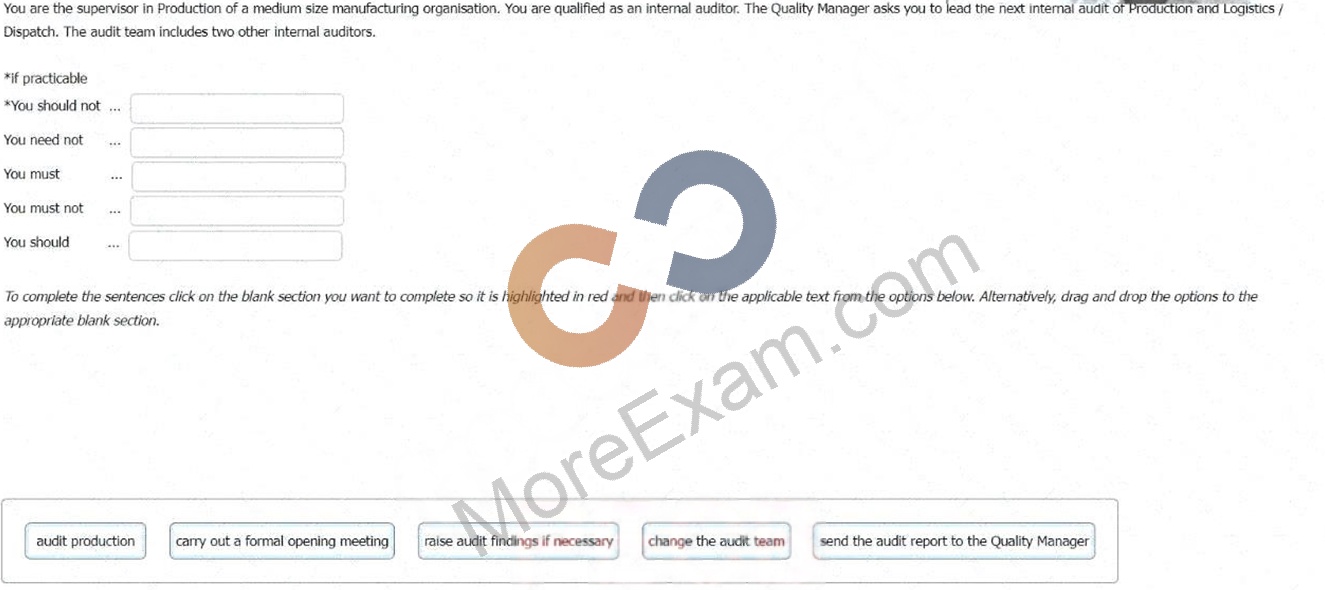
Question52: You are the supervisor in Production of a medium size manufacturing organisation. You are qualified as an internal auditor. The Quality Manager asks you to lead the next internal audit of Production and Logistics Dispatch. The audit team includes two other internal auditors.

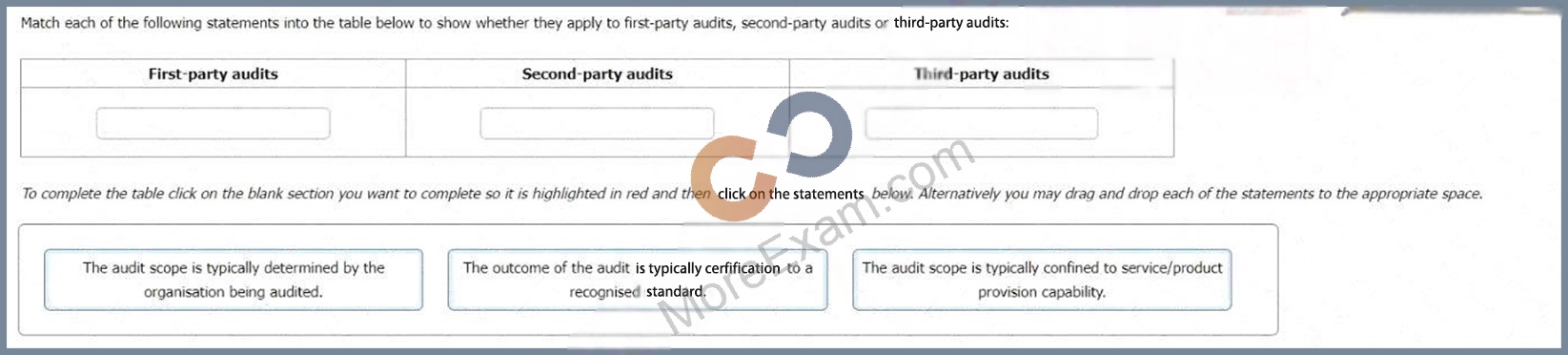
Question53: Match each of the following statements into the table below to show whether they apply to first-party audits, second-party audits or third-party audits:

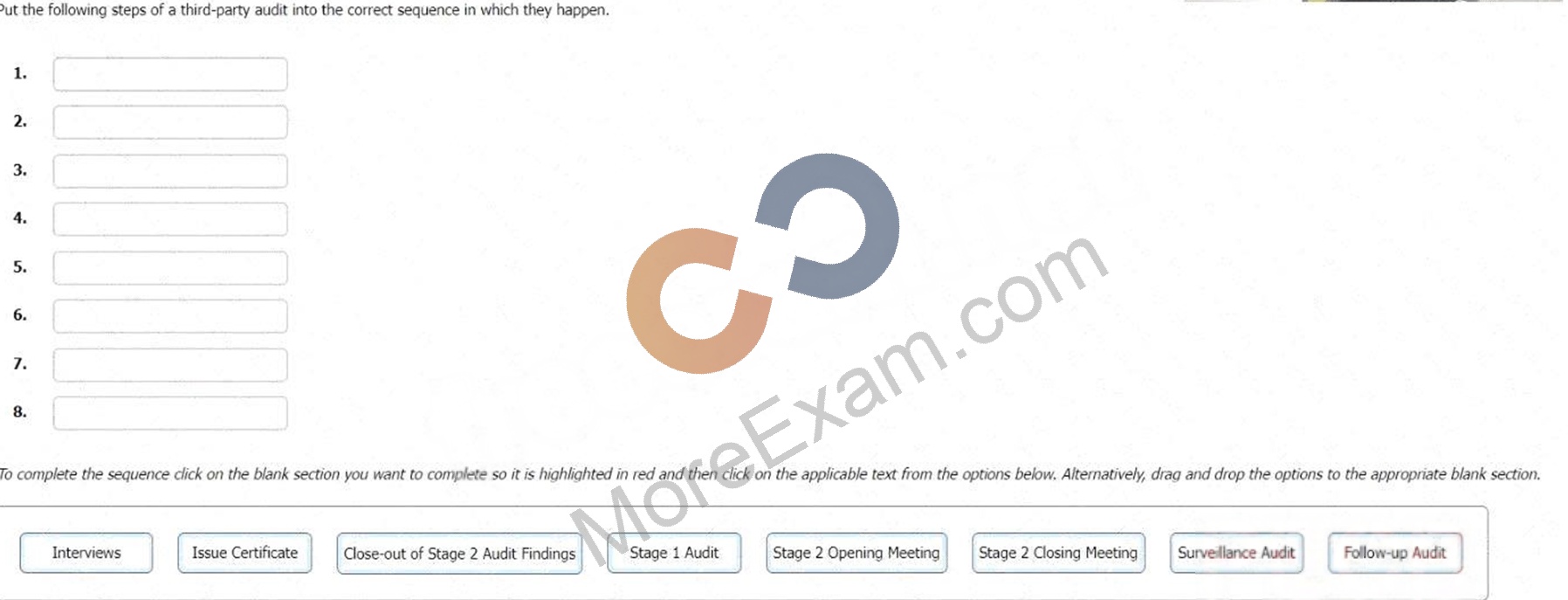
Question54: Put the following steps of a third-party audit into the correct sequence in which they happen.

Question55: Scenario 4:
TD Advertising is a print management company based in Chicago. The company offers design services, digital printing, storage, and distribution. As TD expanded, its management recognized that success depended on adopting new technologies and improving quality.
To ensure customer satisfaction and quality improvement, the company decided to pursue ISO 9001 certification.
After implementing the QMS, TD hired a well-known certification body for an audit. Anne Key was appointed as the audit team leader. She received a document listing the audit team members, audit scope, criteria, duration, and audit engagement limits.
Anne reviewed the document and approved the audit mandate. The certification body and TD's top management signed the certification agreement.
Before contacting TD, Anne reviewed the audit scope and noticed that TD made changes to it due to the adoption of new printing equipment. However, Anne disagreed with the changes, stating they would affect the audit timeline. She considered withdrawing from the audit.
Based on scenario 4, conducting which of the activities below is NOT the responsibility of Anne?

Question56: Scenario 1: AL-TAX is a company located in California which provides financial and accounting services. The company manages the finances of 17 companies and now is seeking to expand their business even more The CEO of AL-TAX, Liam Durham, claims that the company seeks to provide top- notch services to their clients Recently, there were a number of new companies interested in the services provided by AL-TAX.
In order to fulfill the requirements of new clients and further improve quality, Liam discussed with other top management members the idea of implementing a quality management system (QMS) based on ISO 9001. During the discussion, one of the members of the top management claimed that the size of the company was not large enough to implement a QMS. In addition, another member claimed that a QMS is not applicable for the industry in which AL TAX operates. However, as the majority of the members voted for implementing the QMS. Liam initiated the project.
Initially, Liam hired an experienced consultant to help AL-TAX with the implementation of the QMS.
They started by planning and developing processes and methods for the establishment of a QMS based on ISO 9001. Furthermore, they ensured that the quality policy is appropriate to the purpose and context of AL TAX and communicated to all employees. In addition, they also tried to follow a process that enables the company to ensure that its processes are adequately resourced and managed, and that improvement opportunities are determined.
During the implementation process, Liam and the consultant focused on determining the factors that could hinder their processes from achieving the planned results and implemented some preventive actions in order to avoid potential nonconformities Six months after the implementation of the QMS.
AL-TAX conducted an internal audit. The results of the internal audit revealed that the QMS was not fulfilling all requirements of ISO 9001. A serious issue was that the QMS was not fulfilling the requirements of clause 5.1.2 Customer focus and had also not ensured clear and open communication channels with suppliers.
Throughout the next three years, the company worked on improving its QMS through the PDCA cycle in the respective areas. To assess the effectiveness of the intended actions while causing minimal disruptions, they tested changes that need to be made on a smaller scale. After taking necessary actions, AL-TAX decided to apply for certification against ISO 9001.
Based on the scenario above, answer the following question:
According to scenario 1, AL-TAX determined the factors that could hinder their processes from achieving the planned results and implemented preventive actions. This means they employed:

Question57: Scenario 6: Davis Clinic (DC) is an American medical center focused on integrated health care. Since its establishment DC was committed to providing qualitative services for its clients, which is the reason why the company decided to implement a quality management system (QMS) based on ISO 9001. After a year of having an active QMS in place, DC applied for a certification audit.
A team of five auditors, from a well-known certification body, was selected to conduct the audit. Eva was appointed as the audit team leader. After three days of auditing, the team gathered to review and examine their findings. They also discussed the audit findings with DC's top management and then drafted the audit conclusions.
In the closing meeting, which was held between the audit team and the top management of DC. Eva presented two nonconformities that were detected during the audit. Eva stated that the company did not retain documented information regarding its outsourced services for an analysis laboratory and regarding the conducted management reviews. During the closing meeting, the audit team required from DCs top management to come up with corrective action plans within two weeks. Although the top management did not agree with the audit findings, the audit team insisted that the auditee must submit corrective actions within the given time frame in order for the audit activities to continue.
Once the action plans were evaluated, the audit team began preparing the audit report. Eva required from the team to provide accurate descriptions of the audit findings and the audit conclusions. The report was then distributed to all the interested parties involved in the audit, including the certification body Based on the report, the certification body together with Eva, as the audit team leader, made the certification decision.
Based on the scenario above, answer the following question:
Scenario 6 indicates that although the top management did not agree with the audit findings, the audit team began preparing the audit report. Is this acceptable?

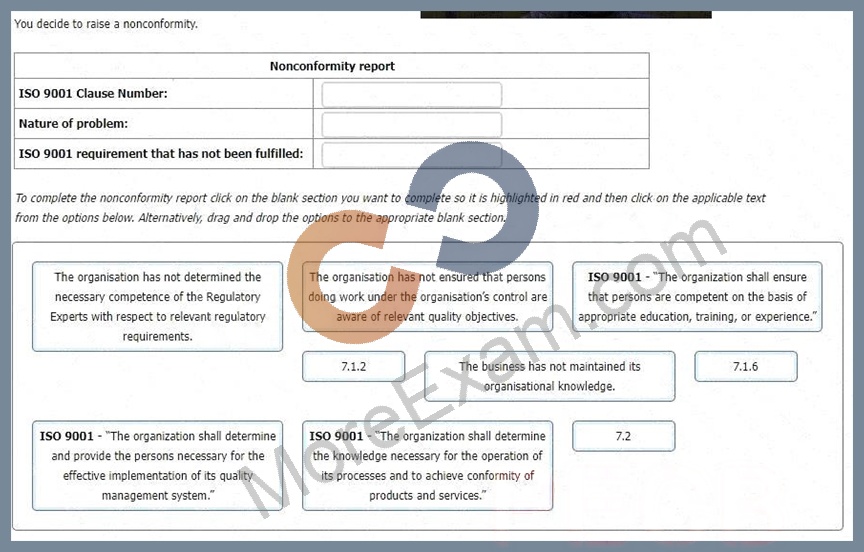
Question58: You are carrying out an audit to ISO 9001 at an organisation which offers regulatory consultancy services to manufacturers of cosmetics.
You are interviewing the Technical Director (TD), who manages a team of regulatory experts responsible for providing regulatory services to customers.
You: "How do you ensure your regulatory team's competence concerning regulatory requirements is maintained?" TD: "The two Regulatory Experts we employ full-time have years of experience of working in the cosmetics industry." You: "How is their regulatory competence maintained?" TD: "They are dedicated individuals with lots of contacts in the sector." You: "How does the business enable them to maintain their understanding of current regulatory requirements?" TD: "We leave that up to them."

Question59: Who would be defined as a witness during a witness audit?
Choose two of the following options:

Question60: Technical experts must operate under the supervision of:
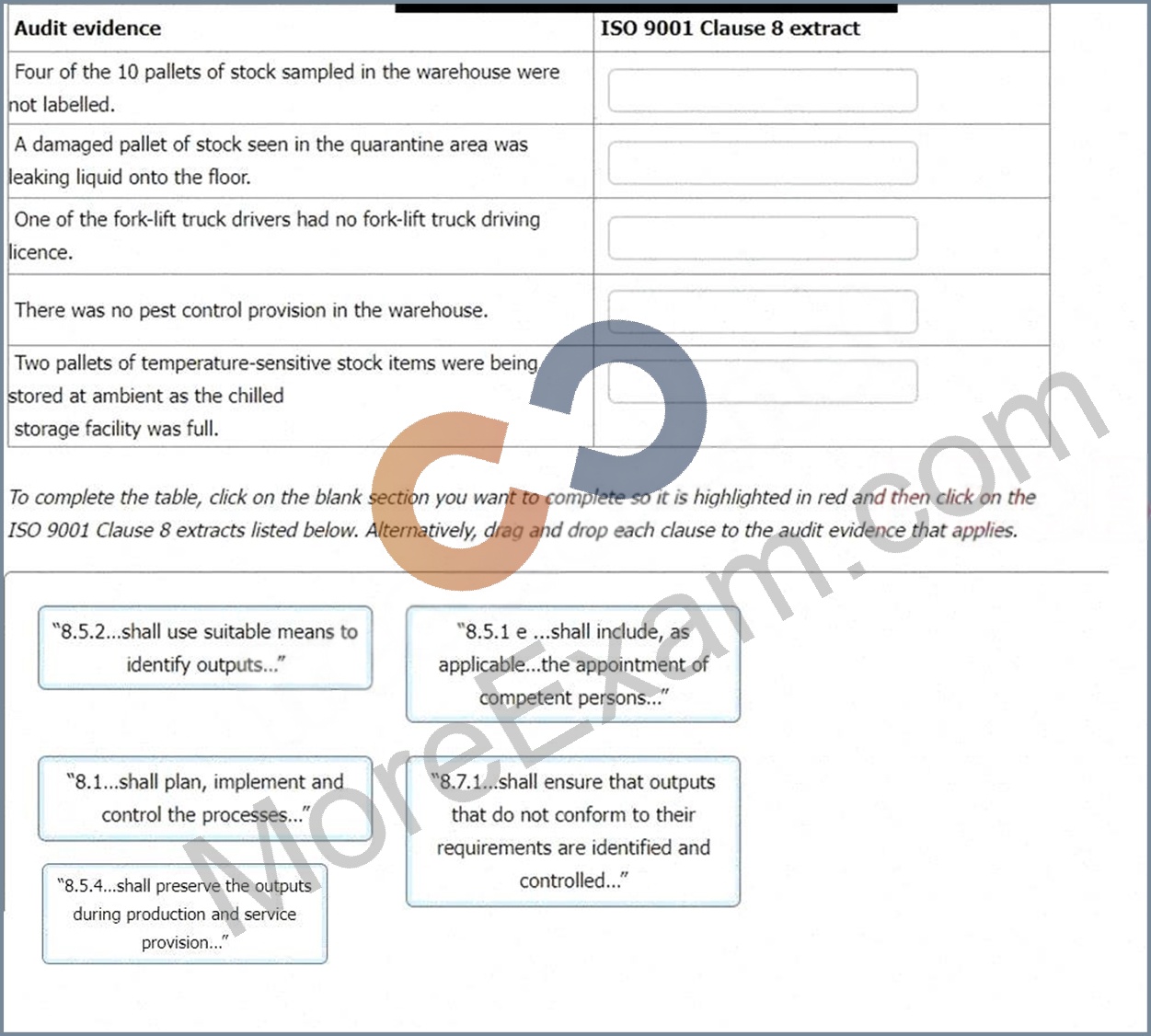
Question61: You are carrying out an audit at a single-site organisation seeking certification to ISO 9001 for the first time.
The organisation offers warehousing and export services to customers. Customers are invoiced for the time stock items are stored in the warehouse. Transport to and from the warehouse is controlled by the organisation and approved subcontract transport services are used. The organization does not have its own transport vehicles. Stock items are not purchased by the organisation.
You have gathered audit evidence as outlined in the table. Match the ISO 9001 Clause 8 extract to the audit evidence.

Question62: You are preparing for interviews with two members of top management. Based on the information that you gathered about the organization, you conclude that it is the top management who takes all the important decisions and closely supervises and controls employees. Based on this, which management style is practiced in the organization?

Question63: Scenario 3:
Fin-Pro is a financial institution in Austria offering commercial banking, wealth management, and investment services. The company faced a significant loss of customers due to failing to improve service quality as they expanded.
To regain customer confidence, top management implemented a QMS based on ISO 9001. After a year, they contacted ACB, a local certification body, to pursue ISO 9001 certification.
The audit team was led by Emilia, an experienced lead auditor, and included three auditors. After an agreement was reached, ACB sent the audit objectives to the audit team.
The audit team began by gathering information about Fin-Pro's understanding of ISO 9001 requirements.
While reviewing documented information, they noticed missing records of training and awareness sessions. They conducted employee interviews to verify attendance.
The team also reviewed the organizational chart and job descriptions to confirm employee competence.
They observed the company's working environment (social, psychological, and physical conditions).
The audit team analyzed the evidence and prepared an audit report with findings and conclusions.
In scenario 3, the audit team required access to see the organizational chart and job descriptions to verify the employees' competence. Based on audit best practices, is this acceptable?

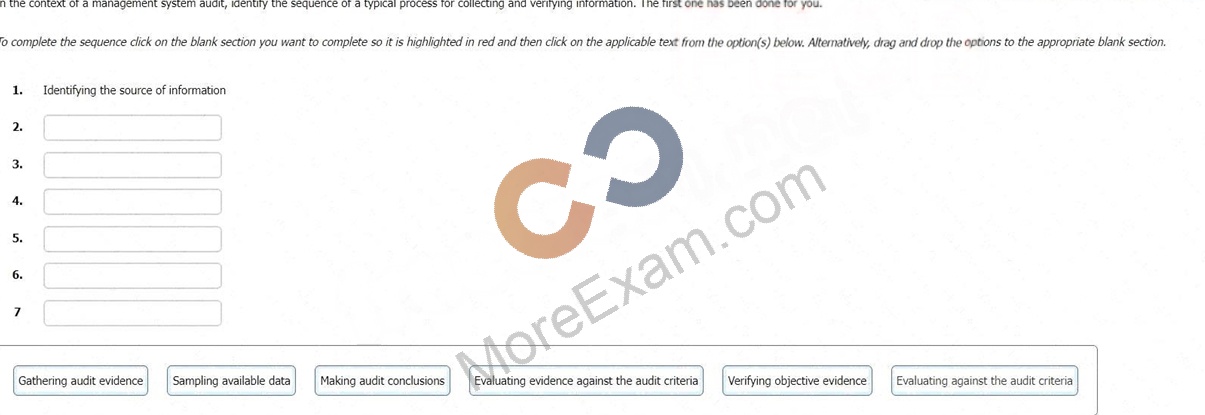
Question64: In the context of a management system audit, identify the sequence of a typical process for collecting and verifying information. The first one has been done for you.
To complete the sequence click on the blank section you want to complete so it is highlighted in red and then click on the applicable text from the options below. Alternatively, drag and drop the options to the appropriate blank section.

Question65: Select the words that best complete the sentence:

Question66: What type of audit evidence are policies and guidelines?